Currently Empty: $0.00
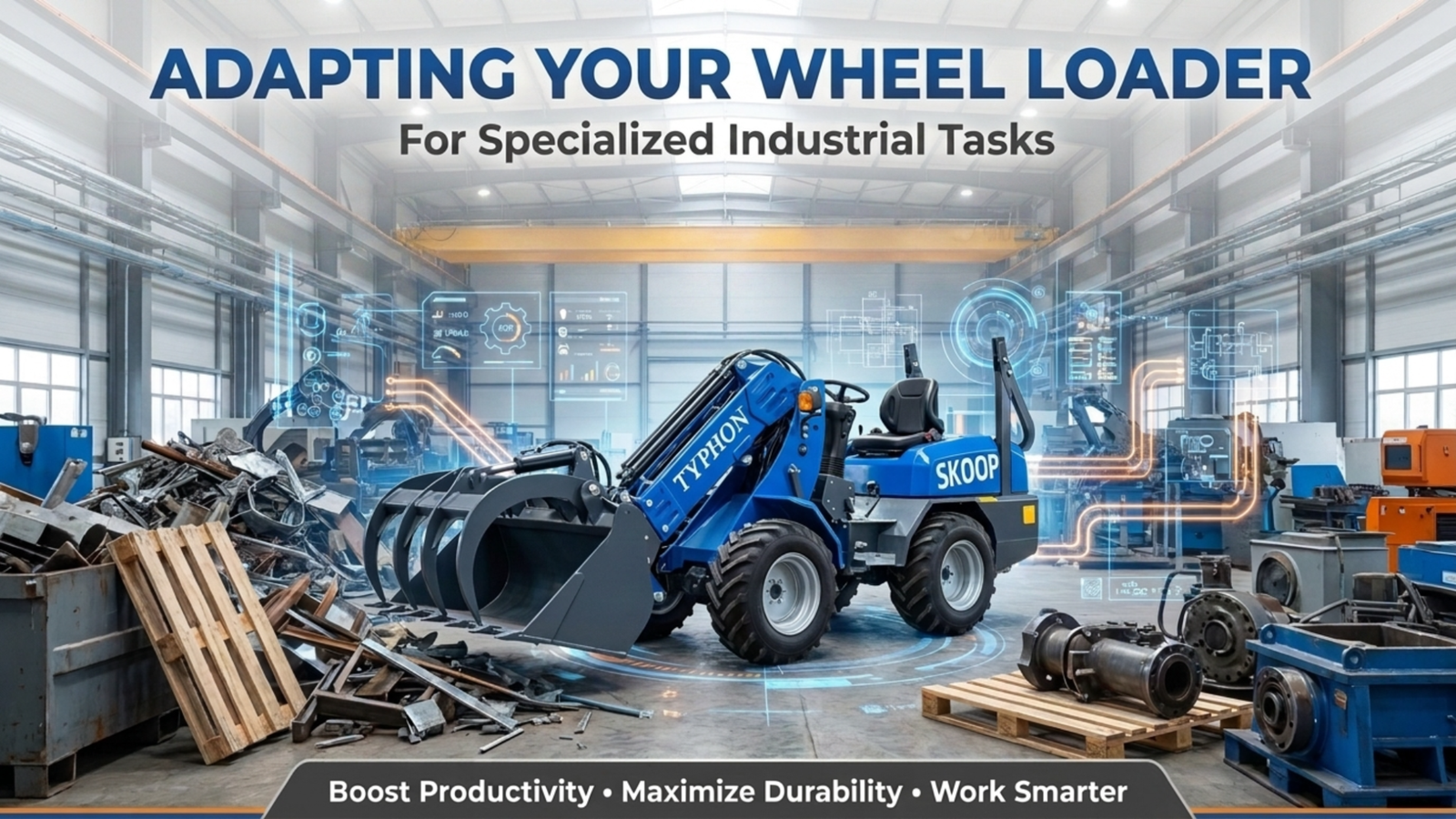
Adapting Your Wheel Loader for Specialized Industrial Tasks
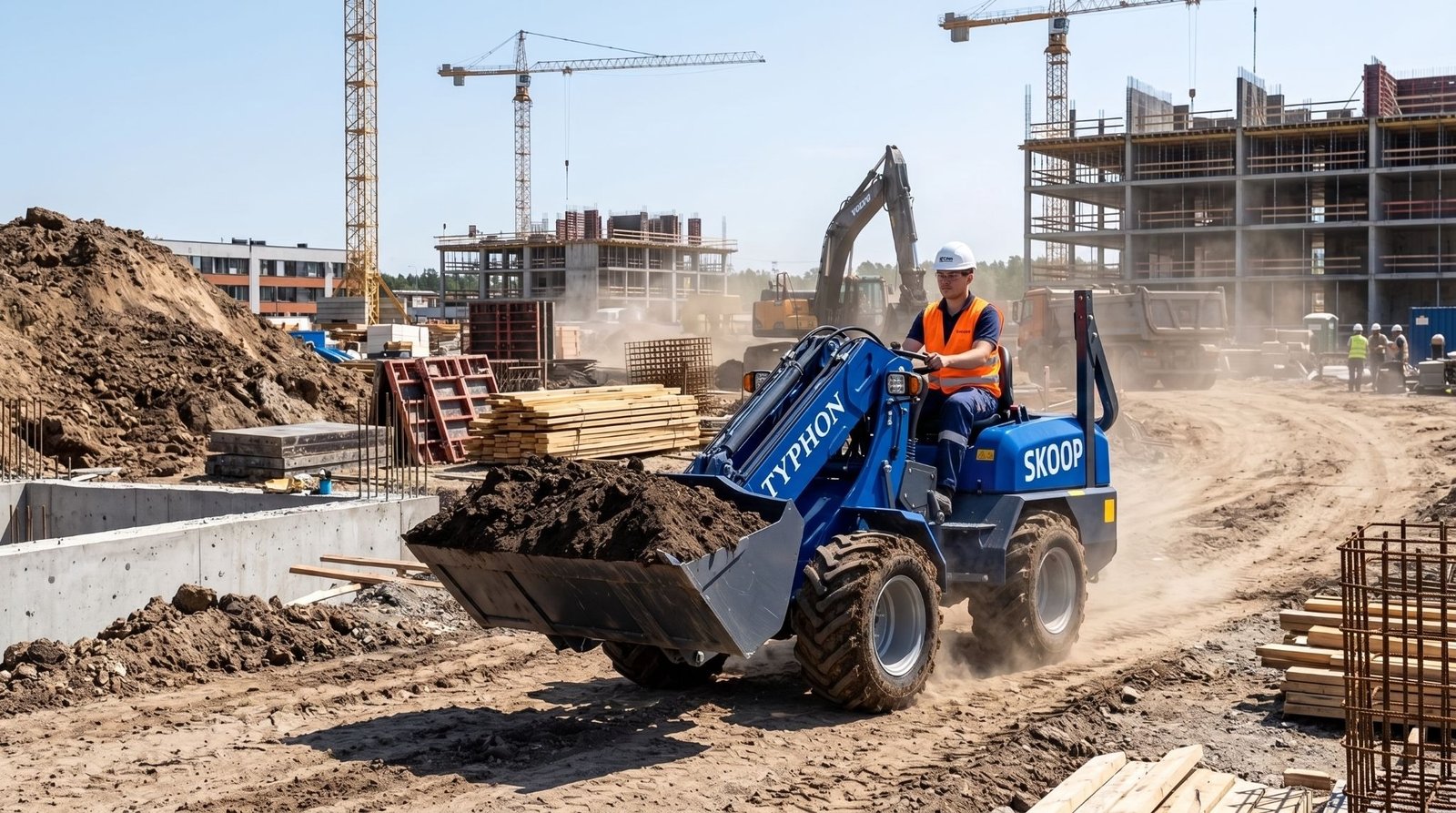
A wheel loader is one of the most capable machines in your fleet, but its true value shows when you adapt it to the specific demands of your industry. A standard configuration handles general work well enough, yet specialized industrial settings ask more of your equipment than a factory-standard setup can reliably deliver. Foundries, recycling centers, chemical plants, and busy stockyards each present conditions that wear machines down faster and demand precision that ordinary tools cannot provide. The good news is that a wheel loader can be transformed into a purpose-built performer through the right attachments, hydraulic setup, protective features, tire choices, and onboard technology. This guide walks you through five practical ways to adapt your loader so it works harder, lasts longer, and delivers the productivity your operation depends on. Match the machine to the task, and you protect both your investment and your bottom line.
Selecting the Right Attachments
Transforming a standard wheel loader into a specialized workhorse begins with the attachments you put on the front of it. High-performance tools like quick-couplers, specialized grapples, and industrial snow blowers extend the machine’s reach into tasks a plain bucket could never handle. The attachment is where the loader meets the work, so choosing the right one for each job is the foundation of a productive, adaptable operation. When you invest in tools built for your specific tasks, you get cleaner results, faster cycle times, and a machine that earns its keep across a wider range of jobs.
The real advantage comes from a quick-attach system. By fitting your loader with a quick-coupler, you can rapidly switch between tasks without hauling the machine back to the shop or wrestling with pins and hardware. Consider how much flexibility that gives you over a single shift:
- Pallet forks for precise material handling and moving palletized goods around the site
- High-capacity buckets for site cleanup, bulk loading, and moving loose material quickly
- Specialized grapples for securing and transporting awkward, irregular loads
- Industrial snow blowers for clearing yards and access roads when winter arrives
That ability to transition from forks to a bucket in minutes keeps the machine versatile throughout the day rather than locking it into one role. Instead of running several dedicated machines, you get more out of a single loader by matching the tool to the moment. This approach reduces equipment costs, simplifies your fleet, and keeps operators moving from one task to the next with minimal downtime. When you build your attachment lineup around the work you actually do, the loader becomes a genuinely flexible asset rather than a single-purpose machine.
Optimizing Hydraulic Configurations
The attachments you choose are only as effective as the hydraulic system driving them. Many specialized industrial tasks depend on dedicated auxiliary hydraulic circuits to power advanced tools that a basic loader simply cannot run. Rotary brooms, hydraulic hammers, and similar powered attachments draw their strength from these circuits, so getting the hydraulics right is what turns a capable machine into a truly specialized one. Without the proper flow and pressure feeding the tool, even the best attachment will underperform or fail early.
Matching your hydraulic output to each attachment is where efficiency and equipment life are won or lost. Every powered tool is engineered to operate within a specific range of flow rates and pressure settings, and running it outside that range strains both the loader and the attachment. A rotary broom needs steady, sustained flow to spin its bristles at the correct speed, while a hydraulic hammer demands high pressure delivered in controlled bursts. Feeding a tool too little robs it of performance; feeding it too much generates heat, accelerates wear, and can damage seals and components on both ends of the connection.
This is why an adjustable valve bank is such a valuable feature on an industrial loader. It lets you dial in the correct flow rate and pressure for each attachment rather than settling for a one-size-fits-all output. When you tune the hydraulics to the tool, you protect the longevity of your equipment and keep every attachment working at its designed efficiency. That care pays off in fewer breakdowns, longer service intervals, and consistent performance across the range of specialized tasks your operation demands. A properly configured hydraulic system is the quiet foundation that makes advanced attachments reliable day after day.
Enhancing Machine Durability and Protection
Industrial environments are hard on equipment in ways that ordinary job sites rarely are. High-heat foundries, corrosive chemical plants, and debris-heavy recycling centers each attack a machine from a different angle, and a standard loader is not built to withstand that punishment for long. Protecting your investment in these settings means adding purpose-built guard packages that shield the loader’s most vulnerable systems from the specific hazards of the work. The extra protection costs far less than the repairs and downtime that follow when critical components fail prematurely.
Effective protection starts with hardening the parts most exposed to damage. Heavy-duty skid plates guard the underside of the machine against impacts and sharp debris that would otherwise puncture or dent unprotected surfaces. Debris-resistant radiator screens keep dust, chaff, and airborne material from clogging the cooling system, which is a constant threat in recycling and manufacturing environments where the air is thick with particles. Specialized seals form another essential layer of defense, preventing material from working its way into critical joints, pivot points, and the engine compartment where it grinds down components and shortens the machine’s life.
The right combination of guards depends on the environment you operate in. A foundry demands protection against intense heat and radiant temperatures, a chemical plant calls for corrosion-resistant materials and seals that stand up to aggressive substances, and a recycling center requires defenses against the constant barrage of sharp, abrasive debris. Taking the time to match your guard package to the actual conditions your loader faces keeps the machine running reliably and protects the systems that would be expensive and time-consuming to repair. Durability upgrades are an investment in uptime, and in harsh industrial settings, they quickly prove their worth.
Tailoring Tire and Undercarriage Specs
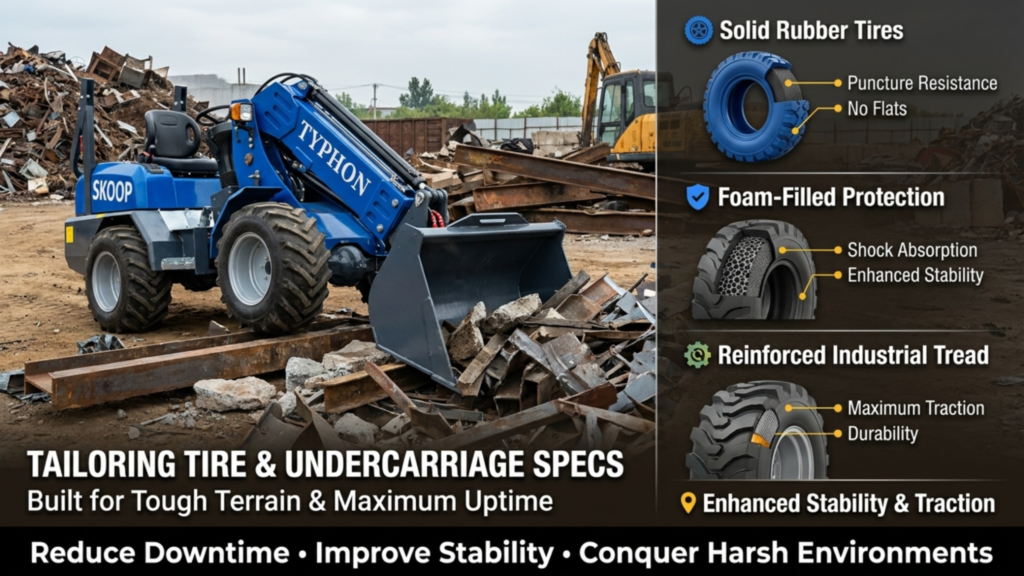
The contact point between your loader and the ground matters more than many operators realize, especially in demanding industrial settings. Standard construction tires are built for general job sites, and they often fail quickly when exposed to the sharp debris or intense heat found in recycling operations and manufacturing plants. A blown tire in the middle of a shift halts productivity, creates a safety hazard, and drives up your operating costs. Choosing the right tires for the environment is a straightforward way to protect uptime and keep the machine working through tough conditions.
Upgrading your tires to match the hazards you face is one of the most cost-effective adaptations you can make. Industrial settings call for tires engineered to survive what would destroy ordinary rubber, and you have several strong options depending on your needs:
- Solid rubber tires that cannot be punctured, ideal for sites littered with sharp scrap, nails, and metal debris
- Foam-filled tires that resist flats while retaining some cushioning for a smoother ride and better operator comfort
- Industrial-tread tires designed with reinforced compounds and tread patterns suited to heat and heavy loads
Each option delivers the puncture resistance and stability that industrial work requires, and the best choice depends on the balance of durability and ride quality your operation needs.
Beyond puncture resistance, the right tires give you the stability to navigate confidently under load. Whether your operators are hauling heavy material across specialized flooring or working over rough, cluttered terrain, properly specified tires keep the machine planted and predictable. That stability protects both the load and the operator while allowing the loader to move efficiently through the site. When you tailor tire specs to the ground your machine actually works on, you reduce downtime, improve safety, and get more productive hours out of every shift.
Integrating Advanced Telemetry and Guidance
Modern industrial applications increasingly demand a level of precision that skill alone cannot guarantee. Accurately loading hoppers, managing tightly organized material stockyards, and hitting consistent target weights all require better information than an operator can gather by eye. This is where advanced telemetry and guidance systems change the way a wheel loader works, turning guesswork into measurable, repeatable performance. Adding this technology helps your operation run tighter, faster, and with fewer costly errors.
Onboard payload scales are among the most valuable upgrades for precision work. By weighing each load as the operator lifts it, the system provides real-time weight data directly in the cab, so operators know exactly how much material they are moving on every pass. That accuracy matters when you are loading a hopper to a specific target, filling trucks to legal limits, or tracking material flow through a facility. It also prevents machine overloading, which protects the loader from the strain and premature wear that come with carrying more than it should. Every load becomes controlled and accountable rather than estimated.
GPS guidance systems bring the same discipline to how the machine moves through a site. In a busy stockyard or a large industrial yard, guidance lets operators follow optimized paths, locate materials precisely, and avoid the wasted movement that creates bottlenecks. The combination of accurate weighing and smart navigation significantly increases output while reducing errors and delays. Operators spend less time second-guessing and more time producing. For operations where precision and throughput are directly tied to profitability, integrating telemetry and guidance transforms the loader from a simple moving machine into a data-driven tool that supports smarter, more efficient work across the entire site.
Conclusion
A wheel loader reaches its full potential when you adapt it to the exact demands of your industrial work. The right attachments and a reliable quick-attach system keep the machine versatile across changing tasks, while a properly tuned hydraulic configuration ensures every powered tool performs as designed. Protective guard packages defend your investment against the heat, corrosion, and debris that define harsh industrial settings, and purpose-built tires deliver the puncture resistance and stability that keep the machine moving safely under load. Layer in payload scales and GPS guidance, and you gain the precision to work faster, prevent overloading, and eliminate the bottlenecks that slow production. Each of these adaptations reinforces the others, and together they turn a standard loader into a dependable, purpose-built asset. Take a close look at the conditions your machine faces every day, then equip it to meet them with confidence.