Currently Empty: $0.00
How Engine Horsepower Affects Wheel Loader Performance
Horsepower is one of the first numbers buyers look at when comparing wheel loaders, and for good reason. It shapes how much a machine can lift, how well it climbs, and how steadily it works through a long, demanding shift. Yet horsepower alone rarely tells the whole story, because the right amount depends on the work you do and how the rest of the machine is built around it. Understanding what horsepower really represents helps you choose equipment that fits your operation rather than simply reaching for the biggest number. This guide explains what engine horsepower measures, how it affects everyday performance, how it works alongside the hydraulic system, how to select the right level for your application, and how to balance power against fuel efficiency and operating costs.
Understanding Wheel Loader Engine Horsepower
Engine horsepower is a measure of how much power a wheel loader’s engine produces to perform work. In practical terms, it reflects the machine’s ability to generate the force needed for demanding tasks such as digging into a pile, lifting a full bucket, and driving heavy loads across a site. A higher horsepower rating means the engine can deliver more power, which generally translates into a machine capable of handling tougher, heavier work without straining. Think of horsepower as the foundation of a loader’s overall capability, since so much of what the machine does depends on the power its engine can supply.
For buyers, understanding horsepower is essential to making a sound comparison between models. Manufacturers list horsepower prominently in their specifications precisely because it gives a quick sense of where a machine sits in terms of capability. A compact loader built for light landscaping work carries a modest horsepower rating, while a large machine designed for heavy construction or mining offers considerably more. Reading these figures with a clear understanding of what they represent lets you narrow your options quickly and sensibly.
Matching horsepower to your workload is where this knowledge pays off. The goal is not to chase the highest rating available, but to choose a machine whose power suits the tasks you perform most often. A few points help frame the decision:
- Higher horsepower supports heavier loads, tougher materials, and more intensive work.
- Lower horsepower suits lighter tasks and keeps a machine efficient and economical.
- Workload match ensures you pay for the capability you actually need, no more and no less.
When you understand what horsepower measures and how it relates to real work, you can compare models with confidence and select equipment that fits your operation properly from the start.
Horsepower and Everyday Job Performance
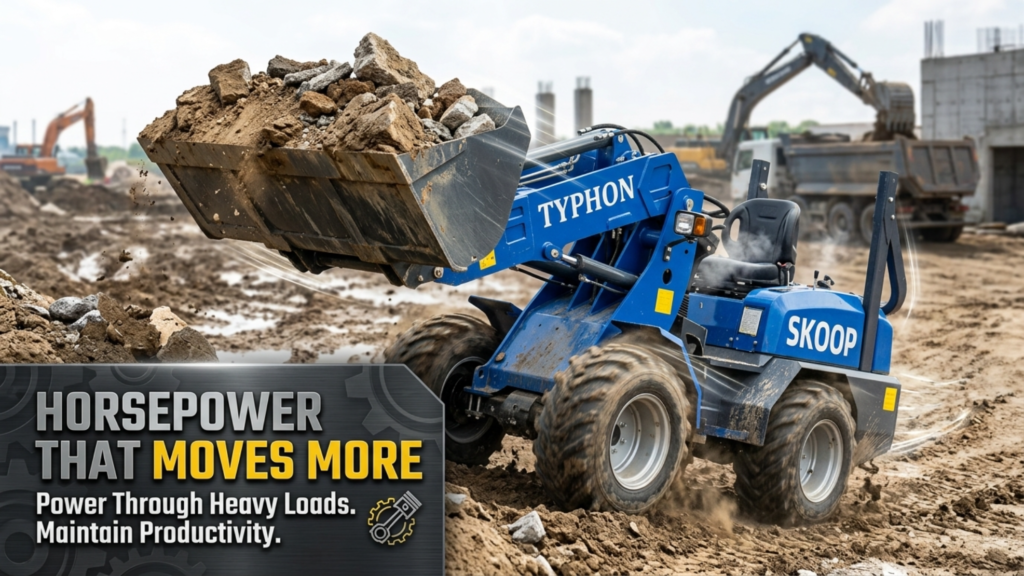
On the job site, engine horsepower reveals itself in the everyday tasks that keep a project moving. A machine with ample power handles heavier loads with ease, filling and lifting a full bucket of dense material without bogging down. That capability matters because a loader constantly working at the edge of its power strains its engine, slows its cycles, and wears down faster. With sufficient horsepower, the machine moves material confidently, completes each cycle briskly, and maintains its pace even when the work is demanding.
Slope climbing and sustained productivity are two more areas where horsepower makes a clear difference. Driving a loaded bucket up an incline or across rough, rising ground requires real power, and a machine with adequate horsepower manages that climb efficiently rather than laboring and losing speed. During long, intensive operations, higher horsepower also helps the machine hold its productivity steady through the shift, since it is not fighting to keep up with the workload. This consistency is exactly what keeps a busy site on schedule.
The right balance, however, always depends on the type of work being performed. More horsepower is not automatically better for every operation, and matching power to the task is what delivers the best results:
- Heavy material handling benefits from higher horsepower for full loads and fast cycles.
- Slope and rough terrain work relies on strong power to climb and maintain speed.
- Intensive, continuous operations depend on sufficient power to sustain productivity.
- Lighter, occasional tasks rarely need high horsepower and run efficiently with less.
A machine matched thoughtfully to its workload performs dependably day after day. When horsepower suits the demands you place on the loader, it moves material efficiently, handles slopes without strain, and keeps productivity high through the toughest shifts, which is precisely what everyday performance comes down to.
How Horsepower Works with the Hydraulic System
Engine horsepower does far more than drive the wheels; it also powers the hydraulic system that performs much of a wheel loader’s real work. The hydraulic system controls lifting, digging, and the operation of attachments, and it draws its energy directly from the engine. When you raise a loaded bucket, curl it to dig into a pile, or run a hydraulic attachment, the engine supplies the power that the hydraulic pump converts into the force that moves those components. A stronger engine gives the hydraulic system more power to work with, which supports faster, more forceful hydraulic action.
This relationship explains why a well-matched engine and hydraulic system are so important to smooth operation. If the engine cannot supply enough power to meet the hydraulic system’s demands, lifting slows, digging force weakens, and attachments run sluggishly, especially when the machine is trying to drive and operate the hydraulics at the same time. A properly balanced pairing, by contrast, lets the loader travel and lift simultaneously without either function starving the other. The result is a machine that responds crisply to the operator’s inputs and handles combined tasks with confidence.
Several hydraulic functions depend directly on the engine’s power output:
- Lifting the boom and a loaded bucket smoothly and without hesitation.
- Digging with enough breakout force to penetrate dense, compacted material.
- Attachment operation for tools that rely on hydraulic flow and pressure.
- Simultaneous movement that lets the machine drive and lift at once.
When the engine and hydraulic system are engineered to work together, the whole machine feels more responsive and capable. Horsepower and hydraulic performance are two sides of the same coin, and a loader that balances them well delivers the smooth, powerful, reliable operation that demanding work requires. Considering how the two systems complement each other helps buyers judge a machine’s true working capability rather than its engine rating alone.
Choosing the Right Horsepower for Your Application
Selecting the right horsepower begins with an honest look at the work your loader will actually do, because different industries and applications call for very different power levels. The material you handle is a major factor. Light, loose materials such as mulch, snow, or loose soil place modest demands on the engine, so a lower-horsepower machine handles them comfortably. Dense, heavy materials like wet aggregate, rock, or compacted earth demand far more power to dig into and lift, which points toward a higher-horsepower loader built for the strain.
Terrain and operating hours weigh just as heavily on the decision. A machine working on flat, firm ground needs less power than one climbing slopes or pushing through rough, uneven sites, where extra horsepower keeps the loader productive rather than laboring. Operating hours matter too, since a machine running long, continuous shifts in demanding conditions benefits from power that lets it sustain its pace, while a loader used occasionally for lighter work rarely needs that reserve. Considering how hard and how often the machine will run helps you gauge the power it truly requires.
Weigh these key factors when matching horsepower to your application:
- Material type: Heavier, denser materials require more power than light, loose ones.
- Terrain: Slopes and rough ground demand more horsepower than flat, firm sites.
- Operating hours: Long, intensive use favors ample power to sustain productivity.
- Task intensity: Demanding, continuous work justifies a higher rating than occasional light jobs.
Getting this match right protects both performance and efficiency. Choosing too little horsepower leaves the machine straining and unable to keep up, while choosing far more than you need wastes fuel and money on capability you never use. Selecting the appropriate horsepower for your material, terrain, and hours ensures the loader delivers sufficient performance without unnecessary consumption, giving your operation a machine that fits its work precisely.
Balancing Power, Fuel Efficiency, and Operating Costs
More horsepower can be tempting, but it does not always translate into better value for your business. A larger, more powerful engine typically burns more fuel, and if that power goes unused on lighter tasks, you are simply paying for consumption that adds nothing to your productivity. This is why the smartest purchasing decisions weigh power against the full picture of ownership costs rather than treating horsepower as a measure of quality on its own. The most capable machine for your operation is the one that delivers the performance you need at a cost you can sustain.
Fuel efficiency and maintenance costs deserve careful evaluation alongside raw power. A machine matched well to its workload runs efficiently, using its fuel to do productive work rather than idling with excess capacity. Maintenance costs also tend to rise with larger, more powerful machines, since bigger engines and heavier-duty components can be more expensive to service and repair over time. Looking at these ongoing expenses together with the purchase price gives a far clearer sense of what a loader will truly cost across its working life.
Productivity ties the whole calculation together, and the goal is finding the point where power, efficiency, and output align. Consider these factors as a connected picture rather than in isolation:
- Fuel efficiency: How much fuel the machine uses to complete its typical work.
- Maintenance costs: The ongoing expense of servicing and repairing the engine and components.
- Productivity: The real output the machine delivers for the power and fuel it consumes.
- Purchase price: The upfront cost weighed against long-term value.
A loader that balances these elements well delivers the most cost-effective performance for your needs. By choosing horsepower that meets your workload without overreaching, you keep fuel consumption reasonable, control maintenance expenses, and still complete your work efficiently. That balanced approach is what separates a smart investment from an expensive one.
Conclusion
Engine horsepower plays a central role in how a wheel loader performs, shaping everything from lifting and digging to slope climbing and sustained productivity. Understanding what horsepower measures helps you compare models sensibly and match a machine to the work you actually do, while recognizing how the engine supports the hydraulic system reveals the true working capability behind the rating. The right choice depends on your material, terrain, and operating hours, and selecting the appropriate power level ensures strong performance without wasting fuel on capability you never use. Above all, more horsepower does not automatically mean better value, so weighing fuel efficiency, maintenance costs, and productivity together leads to the most cost-effective decision. Match horsepower thoughtfully to your operation, and your wheel loader will reward you with dependable, efficient performance for years to come.