Currently Empty: $0.00
How Popular Are Wheel Loaders in the Construction Industry?
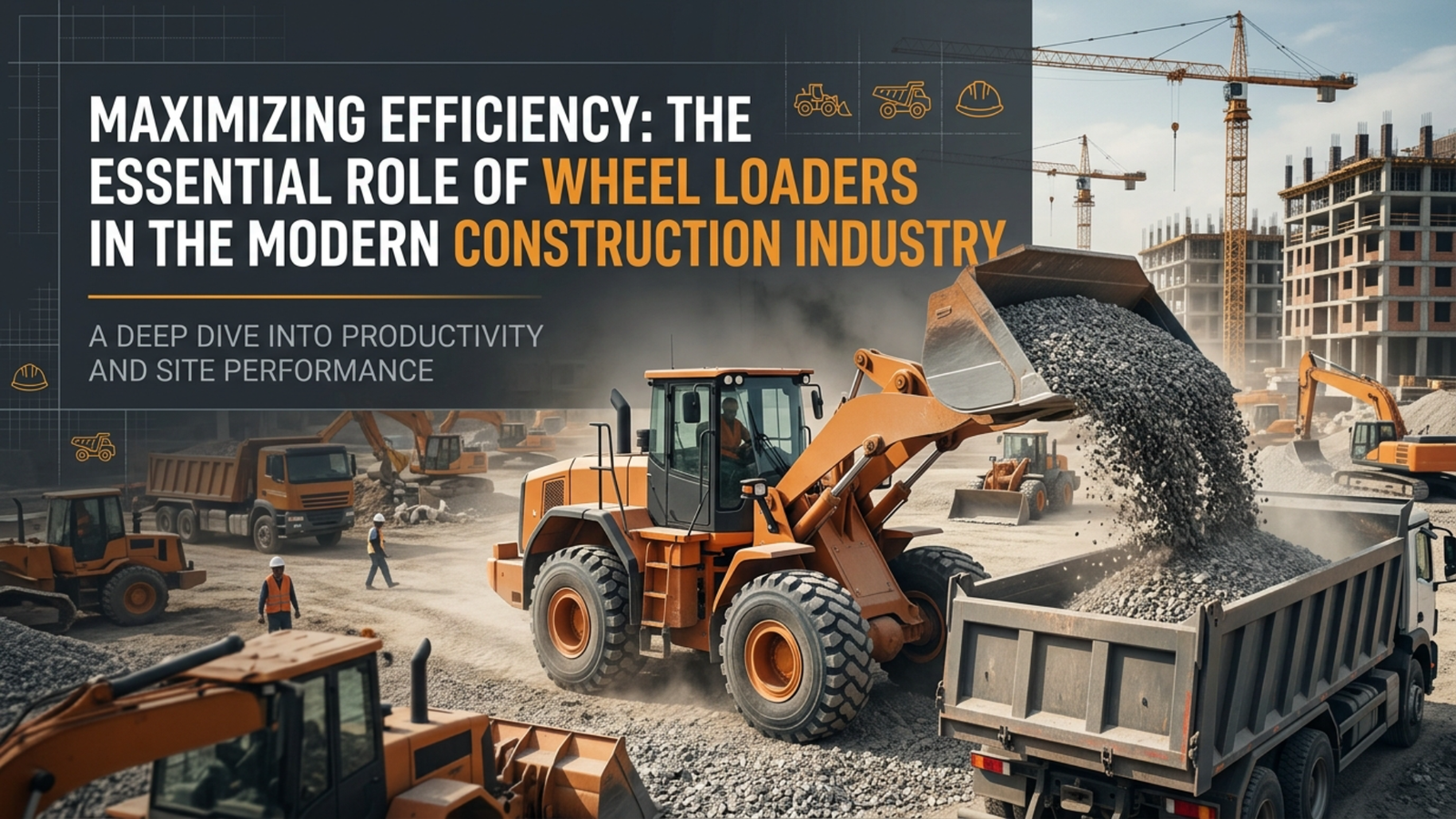
Walk onto almost any construction site, and you will likely spot a wheel loader hard at work. These machines have earned their place as one of the industry’s true workhorses, moving material, loading trucks, and keeping projects on schedule day after day. Their popularity is no accident. Wheel loaders combine speed, versatility, and dependable power in a way few other machines can match, which is exactly why contractors of every size rely on them. This guide explores why wheel loaders are so widely used, the everyday jobs they handle, the benefits that keep them in high demand, the industries beyond construction that depend on them, and how to choose the right machine for your project.
Why Wheel Loaders Are Widely Used on Construction Sites
Wheel loaders rank among the most commonly used machines on construction sites, and their popularity comes down to a rare blend of capability and practicality. At their core, these machines excel at material handling, scooping, carrying, and loading everything from soil and gravel to sand and rubble with ease. That single strength touches nearly every phase of a construction project, which is why you rarely find a busy site without one. Contractors trust wheel loaders because they get demanding work done reliably, shift after shift.
Speed is one of the qualities that sets wheel loaders apart. Unlike slower tracked machines, wheel loaders travel quickly across a site on their tires, moving material from one point to another in less time. That pace translates directly into higher productivity, since crews spend less time waiting and more time building. When a project runs on a tight schedule, the ability to move loads fast makes a genuine difference to the bottom line.
Versatility is the other pillar of their widespread use. A wheel loader is not locked into a single task, because swapping attachments transforms it into a different tool entirely. The same machine that loads aggregate in the morning can handle forks, grapples, or specialized buckets by afternoon. This adaptability, combined with strong lifting power and quick travel, suits projects of every scale. A large commercial build benefits from a big loader moving high volumes of material, while a smaller residential or utility job is well served by a compact model that fits tighter spaces. Whatever the size of the work, there is a wheel loader built to match it, and that flexibility keeps these machines in constant demand across the industry.
Common Construction Jobs for Wheel Loaders
Wheel loaders support a remarkable range of daily construction activities, which explains why they stay busy from the first day of a project to the last. Loading trucks is perhaps their most familiar role. With a full bucket, a wheel loader fills dump trucks quickly and efficiently, keeping material flowing off the site and crews moving forward. Moving aggregates is closely related work, as the machine transports gravel, sand, crushed stone, and soil around the site, supplying every area that needs material without delay.
Beyond loading and hauling, wheel loaders take on the heavier groundwork that keeps a project progressing. They clear debris and rubble at the end of a demolition or cleanup phase, tidying the site so the next stage can begin. They also handle backfilling, pushing and packing soil back into excavations and around new foundations once the underground work is complete. These tasks demand a machine with real power and capacity, and the wheel loader delivers both while maneuvering around the obstacles a busy site presents.
Attachment versatility is what truly expands their capabilities and cements their value. By changing the tool on the front, operators adapt one machine to many jobs, reducing the need for separate equipment. Common construction applications include:
- Loading trucks and hoppers with soil, gravel, and aggregate.
- Moving and stockpiling materials across the site as work demands.
- Clearing debris and rubble during cleanup and demolition phases.
- Backfilling excavations and grading around foundations and trenches.
- Handling pallets and materials with forks, grapples, and specialized buckets.
This range of duties means a single wheel loader often does the work of several machines. For contractors focused on efficiency, that consolidation keeps sites less crowded, simplifies logistics, and ensures the everyday tasks that every project depends on get done dependably.
Benefits That Make Wheel Loaders So Popular
The lasting popularity of wheel loaders rests on a set of practical benefits that contractors feel on every job. Fast travel speeds top the list. Because these machines run on tires rather than tracks, they move quickly between loading and dumping points, cutting cycle times and keeping material flowing. Over the course of a shift, that speed adds up to significantly more work completed, which is exactly what a project schedule and budget both reward.
Strong lifting power and excellent maneuverability work hand in hand to make wheel loaders so capable. Their hydraulics and design let them lift heavy buckets and loads with confidence, handling dense material that would overwhelm lighter equipment. At the same time, their steering, often articulated at a center pivot, allows them to turn tightly and position precisely, even in the confined areas common on active sites. This combination of muscle and agility means one machine handles both heavy work and delicate placement without difficulty.
Perhaps the most compelling benefit is lower operating cost compared to running multiple specialized machines. Because a single wheel loader adapts to so many tasks through its attachments, contractors avoid the expense of buying, maintaining, transporting, and insuring several dedicated pieces of equipment. The key advantages that keep these machines in demand include:
- Fast travel speeds that shorten cycle times and boost daily output.
- Strong lifting power for handling heavy loads and dense materials.
- Excellent maneuverability for precise work in tight, crowded spaces.
- Lower operating costs by replacing several specialized machines with one.
Together, these strengths help contractors complete jobs more efficiently and economically. When one dependable machine delivers speed, power, agility, and cost savings all at once, it becomes an easy choice for operations focused on getting more done for less. That value is the real reason wheel loaders remain a fixture on construction sites everywhere.
Industries Beyond Construction That Use Wheel Loaders
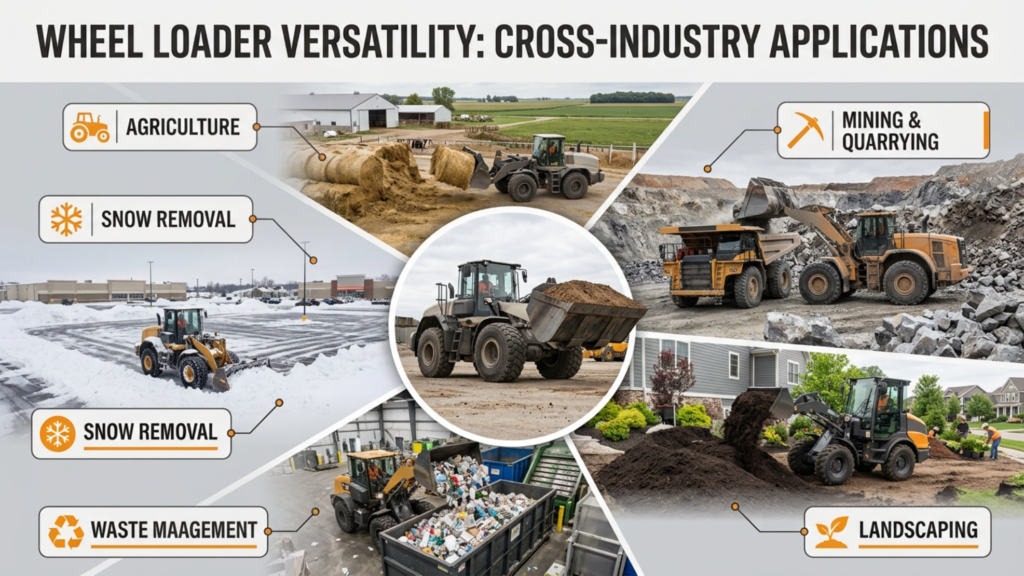
While construction remains their primary market, wheel loaders have proven their worth across a wide range of other industries, and that broad appeal is a major part of their popularity. Agriculture is a natural fit. On farms, wheel loaders move feed, hay, grain, and manure, load and unload supplies, and handle the heavy, repetitive material work that keeps an operation running. Their strength and speed save farmers hours of manual labor, and their attachment flexibility lets one machine serve many roles around the property.
Mining and quarrying rely on wheel loaders for the demanding task of moving large volumes of extracted material. In these settings, heavy-duty loaders scoop ore, rock, and aggregate, loading haul trucks and feeding crushers with impressive capacity. Landscaping crews, at the other end of the scale, use smaller wheel loaders to move soil, mulch, gravel, and sod, working carefully around finished areas while still handling substantial loads. The same machine that thrives on a rugged mine site has a compact cousin perfectly suited to a residential landscape project.
Waste management and snow removal round out the picture and show just how adaptable these machines are. In waste facilities, wheel loaders push, sort, and load refuse and recyclable material, standing up to tough, continuous use. During winter, fitted with blades or pushers, they clear snow from lots, roads, and large paved areas quickly and effectively.
Wheel loaders serve many fields beyond construction:
- Agriculture for feed, grain, manure, and general material handling.
- Mining and quarrying for loading ore, rock, and heavy aggregate.
- Landscaping for moving soil, mulch, and gravel on finished sites.
- Waste management for sorting and loading refuse and recyclables.
- Snow removal for clearing lots, roads, and large open areas.
This versatility across industries makes a wheel loader a valuable investment well beyond the job site, giving owners confidence that the machine will earn its keep in many settings.
Choosing the Right Wheel Loader for Your Project
Selecting the right wheel loader comes down to matching the machine’s capabilities to the genuine demands of your work. There is no single best model, only the one that fits how you actually operate. Operating weight is a sensible starting point, since it shapes stability, lifting capacity, and how the machine handles your ground. A heavier loader offers greater stability and power for demanding work, while a lighter model brings agility and a gentler footprint for tighter or more delicate sites. Choosing the right weight class keeps performance and cost in balance.
Bucket capacity and lifting requirements deserve close attention, because they determine how much the machine moves in a single cycle and whether it can handle your heaviest loads safely. Look honestly at the materials you handle most and the volumes you need to move, then choose a bucket size that keeps you productive without overworking the machine. Consider lift height and reach too, ensuring the loader can load your trucks and reach the places your work demands with room to spare.
Jobsite conditions tie everything together and should guide your final decision. Firm, open sites suit larger machines, while soft ground, tight spaces, or finished surfaces call for a more compact, careful choice. Weigh these key factors before you commit:
- Operating weight matched to your stability, power, and ground needs.
- Bucket capacity is sized to the materials and volumes you handle most.
- Lifting requirements including the height, reach, and weight of your loads.
- Jobsite conditions such as space, terrain, and surface sensitivity.
Matching the machine to the application is what maximizes productivity and reduces operating costs over the life of the equipment. A wheel loader sized correctly for your loads, fitted for your tasks, and suited to your sites will outperform a poorly matched machine every time. Take the time to assess your work carefully, and you will invest in a loader that delivers dependable, cost-effective results.
Conclusion
Wheel loaders are among the most popular and dependable machines in the construction industry, and for good reason. Their speed, versatility, strong lifting power, and maneuverability let them handle a wide range of daily tasks, from loading trucks and moving aggregates to clearing debris and backfilling excavations. Add attachment flexibility and lower operating costs than running several specialized machines, and their widespread use across projects of every size makes complete sense. Their value extends well beyond construction into agriculture, mining, landscaping, waste management, and snow removal too. To get the most from one, match the operating weight, bucket capacity, lifting requirements, and jobsite conditions to your specific application. Assess your needs carefully, choose the right machine, and a wheel loader will reward you with efficient, reliable performance for years to come.