
Currently Empty: $0.00
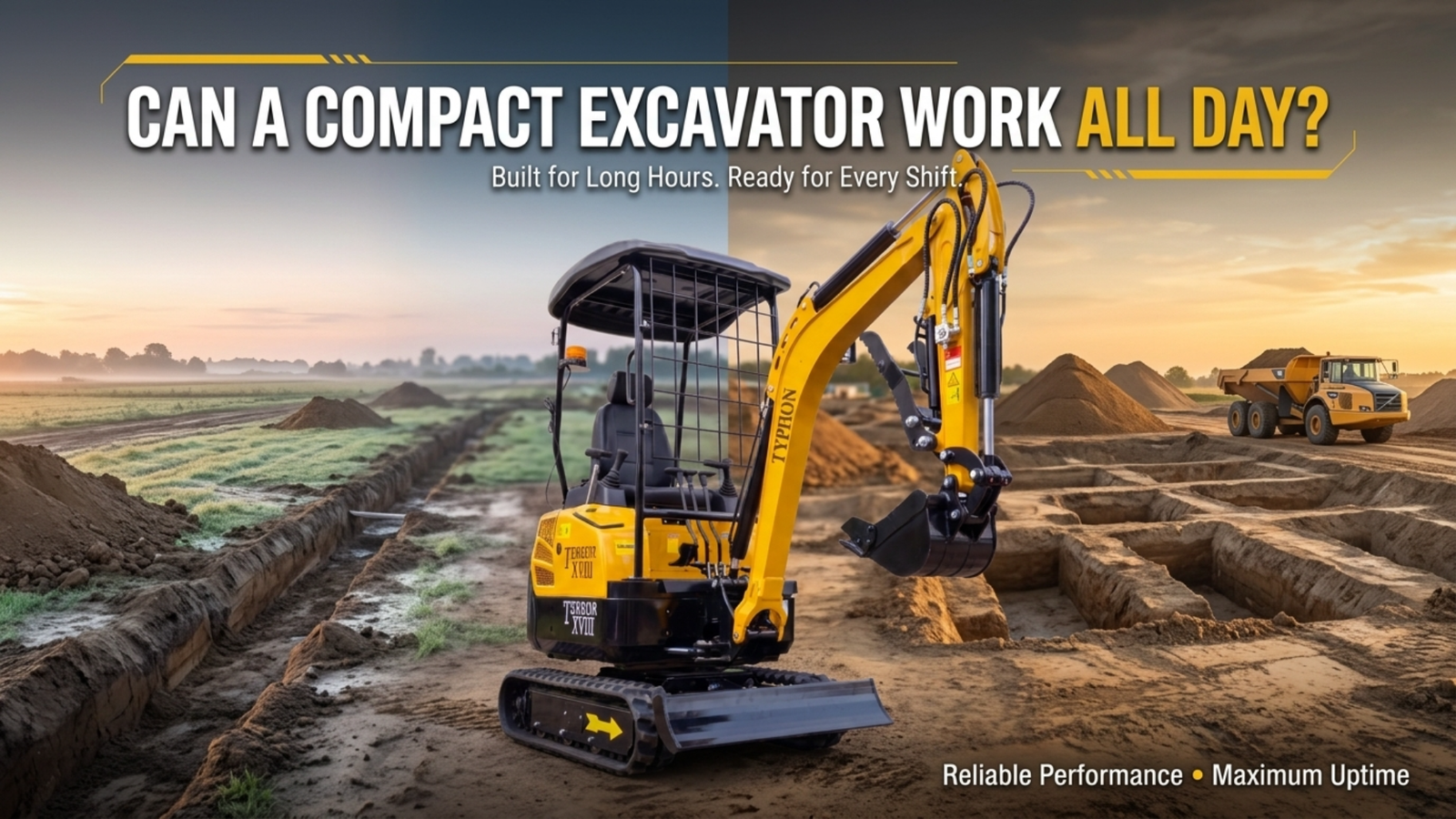
It is a fair question for anyone running a tight project schedule: can a compact excavator really keep digging from sunrise to sunset without missing a beat? The short answer is yes, but the full answer depends on how well you manage the machine over those long hours. A compact excavator is built to work hard, yet running it all day places genuine demands on its engine, fuel supply, hydraulics, and the person in the seat. Push it carelessly, and you invite overheating, downtime, and premature wear. Manage it wisely, and it delivers dependable performance shift after shift. This guide walks you through everything that determines whether your machine can go the distance, from cooling and fuel to hydraulic heat, operator fatigue, and the daily checks that keep long days trouble-free.
Engine Duty Cycles and Cooling
Compact excavators are engineered from the ground up for continuous operation, and their engines are designed to run for long, demanding stretches without complaint. Manufacturers build these machines expecting them to work full shifts on job sites where stopping is not an option, so under normal conditions, a compact excavator handles a full day of digging comfortably. The engine, cooling system, and supporting components are matched to sustain steady output hour after hour, which is exactly why contractors rely on them for everything from utility trenching to foundation work that stretches across an entire day.
That said, continuous heavy digging places real strain on the cooling system, and hot weather magnifies the challenge considerably. When the machine works non-stop under a high load in warm conditions, the engine generates more heat than it does during lighter, intermittent tasks. If the cooling system cannot shed that heat fast enough, temperatures climb toward the danger zone. Overheating is one of the most common threats to a machine asked to run all day, and it can lead to reduced performance, forced shutdowns, and serious engine damage if ignored.
Monitoring engine temperature is your best defense against these problems, and it costs you nothing but attention. Keep these practices in mind during extended shifts:
- Watch the temperature gauge regularly, especially during heavy digging in hot weather.
- Keep the radiator and cooling fins clean, since dust and debris block airflow and trap heat.
- Check coolant levels as part of your daily routine to ensure the system works properly.
- Ease off or idle briefly if temperatures begin climbing toward the upper range.
When you stay alert to how the engine is running and respond to early warning signs, the machine handles continuous work reliably. A compact excavator will run all day when its cooling system is clean, its coolant is topped up, and its operator keeps an eye on temperature through the hottest, hardest stretches of the shift.
Fuel Capacity and Refueling Intervals
Fuel capacity is one of the most practical factors that shapes how a compact excavator handles a full working day. Standard fuel tanks on these machines typically support somewhere between four and eight hours of continuous operation, though the exact figure depends heavily on how hard the machine is working. Light grading and finishing tasks sip fuel slowly, stretching a tank across a longer stretch, while heavy, non-stop digging under load burns through it far faster. Knowing roughly how long your machine runs on a full tank under your typical workload is the first step toward planning a smooth, uninterrupted day.
Because a single tank may not cover a full shift of demanding work, managing refueling becomes essential to avoiding unexpected downtime. Running dry in the middle of a task not only halts progress but can also introduce air into the fuel system, creating additional delays while you prime and restart the machine. On tight project schedules, those unplanned stops add up quickly and eat into the productivity you are counting on.
The solution is to build refueling into your day rather than leaving it to chance. A few simple habits keep the machine fed and working:
- Start each day with a full tank so you begin with maximum working time available.
- Plan refuel breaks to coincide with natural pauses, such as operator rest periods.
- Keep fuel on site so topping up is quick and does not require leaving the job.
- Refuel before the tank runs low to avoid drawing air into the fuel system.
Handled this way, refueling becomes a brief, routine stop rather than a disruptive scramble. By understanding your machine’s fuel range and scheduling quick top-ups around the natural rhythm of the workday, you keep the excavator running steadily and protect your project timeline from avoidable interruptions.
Hydraulic Fluid and Component Heat
The hydraulic system does the heavy lifting on a compact excavator, powering the boom, arm, bucket, and every attachment you run. That constant work generates significant heat, and during a full day of continuous digging and lifting, hydraulic temperatures can climb steadily. Heat is an unavoidable byproduct of hydraulic operation, but excessive heat is where problems begin. As the fluid gets hotter than intended, its viscosity changes, thinning out and losing the ability to protect and lubricate the components it flows through. Over time, running hot degrades the fluid and accelerates wear on pumps, valves, and cylinders.
Managing hydraulic temperature during long shifts is therefore just as important as watching the engine. The good news is that you do not need to stop working entirely to keep temperatures in check. Building brief idle periods into the day gives the fluid a chance to circulate and cool without the load of active digging, while alternating heavy tasks with lighter ones prevents the system from running at maximum output for hours on end. These small adjustments help keep hydraulic temperatures within safe operational limits without sacrificing much productivity.
A few sensible practices protect the hydraulic system through a full day of work:
- Allow short idle periods so the fluid can circulate and shed heat between heavy tasks.
- Mix in lighter work rather than digging at full load continuously for hours.
- Check hydraulic fluid level and condition daily, watching for signs of overheating or breakdown.
- Keep the oil cooler clean, since blocked cooling fins trap heat in the system.
When you respect the heat that continuous hydraulic work generates and give the system opportunities to cool, the fluid stays within its ideal range and continues to protect the components it serves. That care preserves smooth, precise operation and prevents the costly premature wear that overheated hydraulics inevitably bring to a machine worked hard all day.
Operator Comfort and Fatigue Management
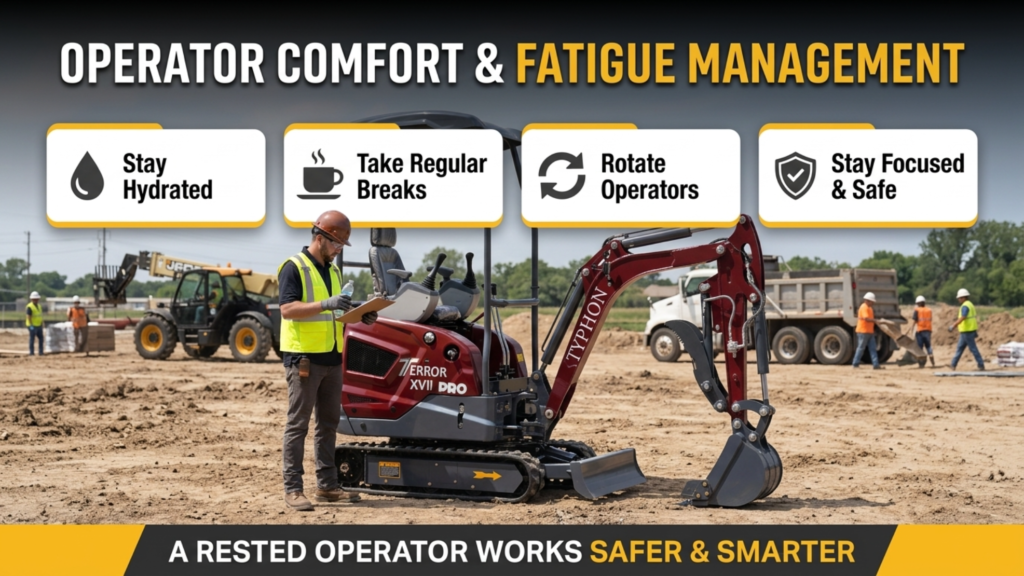
A compact excavator can run continuously, but the person operating it cannot, and that human factor often becomes the real limit on a full day of work. Operator fatigue is one of the most significant challenges on any long shift, and its effects reach far beyond simple tiredness. As hours pass, a fatigued operator loses focus, reacts more slowly, and makes small errors that would never happen when fresh. On a job site where precision and awareness keep everyone safe, that decline in alertness poses a genuine risk to both the operator and the crew working nearby.
Fatigue also quietly erodes productivity and quality. Digging accurate trenches, grading to spec, and placing loads precisely all demand concentration, and a tired operator simply cannot maintain that standard through an entire day without relief. Work slows, mistakes creep in, and the efficiency you gained from running the machine continuously starts to slip away. Recognizing that operator endurance, not machine capability, is often the binding constraint helps you plan a day that stays both safe and productive from start to finish.
The most effective way to manage fatigue is to build relief directly into the schedule rather than pushing operators to their limits. Consider these approaches for maintaining efficiency and precision across a full day:
- Rotate operators where possible, so a fresh, alert person is always at the controls.
- Schedule regular rest breaks to let operators recover focus and physical energy.
- Time breaks with refueling so the machine and operator rest together without extra downtime.
- Encourage proper hydration and comfort, since a comfortable operator stays sharper longer.
When you treat operator well-being as seriously as machine maintenance, the whole operation benefits. A rested, alert operator works more safely, produces better results, and sustains the precision that quality work demands. Managing fatigue thoughtfully ensures that the machine’s all-day capability translates into a genuinely productive, safe day on the job.
Maintenance and Daily Pre-Check Requirements
Running a compact excavator all day rests on a foundation laid before the machine ever starts digging: the daily pre-check. A thorough inspection at the beginning of each shift is the single most reliable way to prevent the mid-shift breakdowns that derail a project schedule and rack up repair costs. When a machine is asked to work long, continuous hours, every component operates under sustained demand, and small problems that might go unnoticed on a short job have plenty of time to grow into serious failures. Catching those issues before they escalate keeps the machine working and your day on track.
A proper daily check covers the key systems that keep the excavator running dependably through a full shift. Taking a few minutes each morning to work through these areas pays for itself many times over:
- Fluid levels, including engine oil, coolant, hydraulic fluid, and fuel, topped up and free of contamination.
- Tracks and undercarriage, checked for proper tension, wear, and lodged debris.
- Grease points, lubricated to protect pins, bushings, and pivot points that work hard all day.
- Leaks, hoses, and fasteners, inspected for drips, cracks, or loose hardware that signal trouble ahead.
Skipping these routine checks is a gamble that rarely pays off. A low fluid level can lead to overheating, an under-greased joint wears rapidly, and a small leak spotted in the morning is far easier to address than a failure that strands the machine at midday. The risk of unexpected component failure climbs sharply when maintenance is neglected, and a breakdown during long operating hours costs you far more in lost time than the inspection ever would have taken. By committing to diligent daily pre-checks, you ensure the machine is ready for the demands of a continuous shift, protect your investment from avoidable wear, and give yourself the confidence that the excavator will keep working as hard as you do, all day long.
Conclusion
Yes, a compact excavator can successfully work all day long, provided it is properly maintained, supplied with fuel, and operated within safe thermal limits. These machines are engineered for continuous operation and handle full shifts with confidence, but getting the most from them takes thoughtful management rather than simply running them flat out. Keep the engine and hydraulic systems cool, plan quick refuel stops around the workday, and stay alert to the temperatures that heavy, non-stop work generates. Just as importantly, remember that operator endurance and daily maintenance are every bit as critical as the machine’s own capability. While compact excavators are fully capable of handling continuous shifts, balancing heavy workloads with scheduled cool-down periods and operator breaks ensures maximum efficiency and prevents premature wear, keeping your machine productive and dependable for years of demanding work.