Currently Empty: $0.00
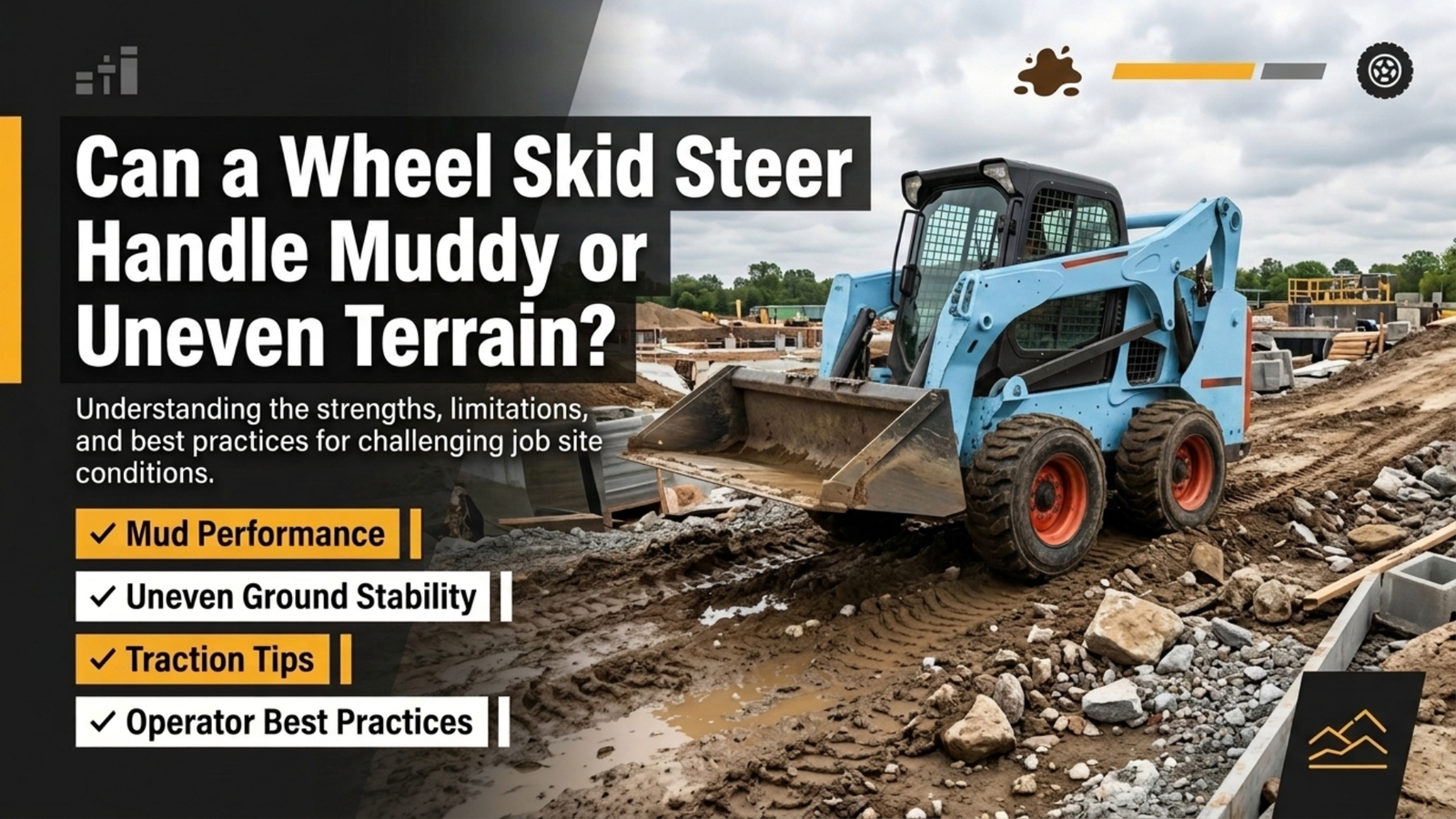
A wheel skid steer is one of the most versatile machines on any job site, but its performance depends heavily on the ground beneath it. When conditions turn muddy, rutted, or rough, operators naturally start to wonder whether a wheeled machine can keep up or whether they need tracks instead. The honest answer is that a wheel skid steer handles far more than many people expect, provided you understand its strengths and respect its limits. This guide breaks down how these machines perform in mud and on uneven ground, the advantages they bring to challenging terrain, the drawbacks worth planning around, and the practical steps that keep operation safe and productive. Read on to decide with confidence whether a wheel skid steer fits the conditions you work in.
How Wheel Skid Steers Perform on Muddy Terrain
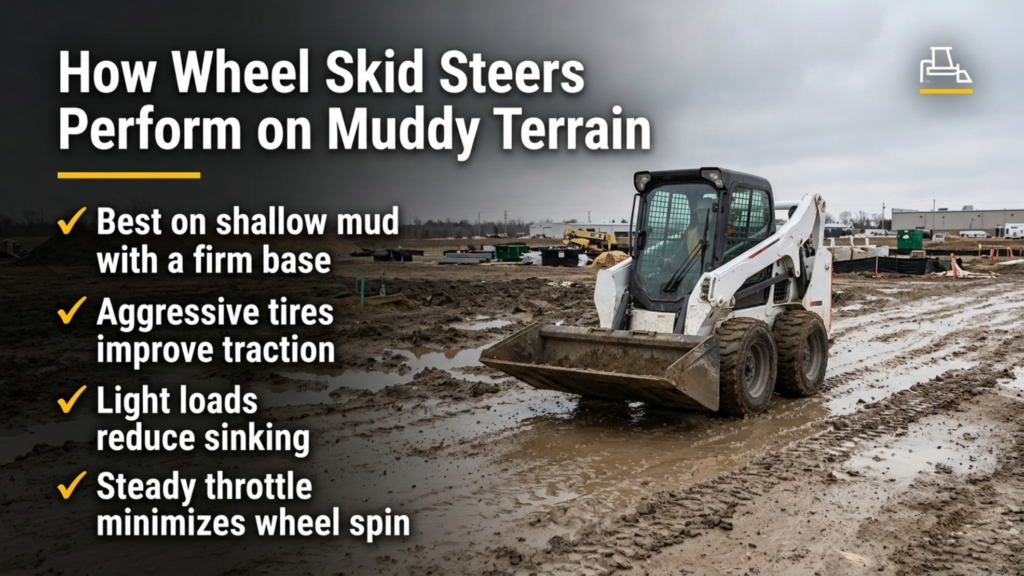
Mud is one of the toughest tests for any wheeled machine, and it affects a skid steer in several ways at once. When the ground turns soft and saturated, tires lose their grip and begin to spin rather than pull, which slows forward progress and makes steering unpredictable. Because a skid steer turns by varying the speed of its wheels, that loss of traction directly reduces your control over the machine. Productivity takes a hit too, since spinning tires dig ruts, waste fuel, and leave the operator fighting the ground instead of getting work done.
Still, a wheel skid steer is far from helpless in the mud. Its performance depends heavily on how deep and how soft the ground actually is. On shallow mud over a firm base, a wheeled machine can work effectively, especially when it is fitted with the right tires and operated with care. The trouble begins when the mud is deep enough that the machine sinks and the tires cannot reach solid ground underneath.
Several conditions help a wheel skid steer stay productive in muddy settings:
- A firm base beneath the mud gives tires something solid to grip through the surface slop.
- Aggressive mud-terrain tires clear packed soil and bite far better than worn, general-purpose treads.
- Lighter loads reduce the downward pressure that pushes tires into soft ground.
- Controlled, steady throttle limits wheel spin that would otherwise churn the surface and dig the machine in.
When these factors line up, a wheel skid steer moves and works dependably even when the site is wet. Match the machine and your technique to the actual depth of the mud, and you can stay productive in conditions that look worse than they are.
Can Wheel Skid Steers Handle Uneven Ground?
Uneven ground covers a wide range of conditions, from gentle slopes and shallow ruts to loose gravel and rocky, broken surfaces. A wheel skid steer navigates most of these well, and its compact frame and responsive controls actually give it an advantage on firm but irregular terrain. Over gravel, packed dirt, and moderate bumps, the machine stays stable and maneuverable, letting operators work with confidence where the ground is rough but solid. The key distinction is firmness. Uneven ground that holds the machine’s weight is far easier to handle than soft, shifting terrain.
Slopes and ruts demand more attention, since they challenge the machine’s balance and traction. On a grade, the center of gravity shifts, and carrying a raised load makes the risk of tipping climb quickly. Deep ruts can catch a wheel, jolt the machine, or twist its stance in ways that reduce control. Loose gravel adds another variable, because the surface can slide underfoot and momentarily break traction, especially during turns or on inclines.
Several factors determine how well a wheel skid steer holds its footing on uneven terrain:
- Ground firmness matters most, since solid surfaces support stability while soft ones undermine it.
- Load height affects balance, so keeping the bucket low steadies the machine on slopes and bumps.
- Tire condition and tread influence grip on gravel and rough patches.
- Travel speed shapes control, as slower movement lets the machine settle into ruts and dips smoothly.
With these factors managed, a wheel skid steer handles uneven ground reliably. Approach slopes squarely, keep loads low, and slow down over rough patches, and the machine stays stable and controllable across most of the irregular surfaces a job site presents.
Advantages of Using a Wheel Skid Steer on Challenging Terrain
When the terrain is firm but rough, a wheel skid steer brings real advantages that make it the smart choice for many operations. The most immediate benefit is speed. Wheeled machines travel noticeably faster than tracked ones, so moving across a large site, repositioning between tasks, or covering ground between the work area and the material pile all happen quickly. On jobs where travel distance eats into productivity, that faster pace adds up to more work completed in a shift.
Maneuverability is another strong point. A wheel skid steer turns tightly and responds nimbly, which makes it easy to work in confined spaces and navigate around obstacles on cluttered or uneven ground. Operators appreciate how directly the machine reacts, since that responsiveness translates into precise, efficient work even when the surface is bumpy or broken. On firm, uneven terrain like packed gravel or dry, rutted dirt, this combination of speed and agility lets the machine perform at its best.
Lower maintenance rounds out the picture and protects your long-term costs. A wheeled undercarriage is simpler and less expensive to maintain than a tracked one, and tires cost far less to replace than tracks when the time comes. The main advantages include:
- Faster travel speeds that cut down on time spent moving across the site
- Easy maneuverability for tight spaces and precise positioning
- Lower maintenance costs thanks to a simpler undercarriage and affordable tires
- Strong performance on firm, uneven surfaces where grip is available
Taken together, these strengths make a wheel skid steer a dependable, cost-effective machine for challenging terrain that stays reasonably firm. When your work happens on solid ground that simply happens to be rough, the wheeled machine delivers efficiency and value that tracks struggle to match.
Limitations to Keep in Mind
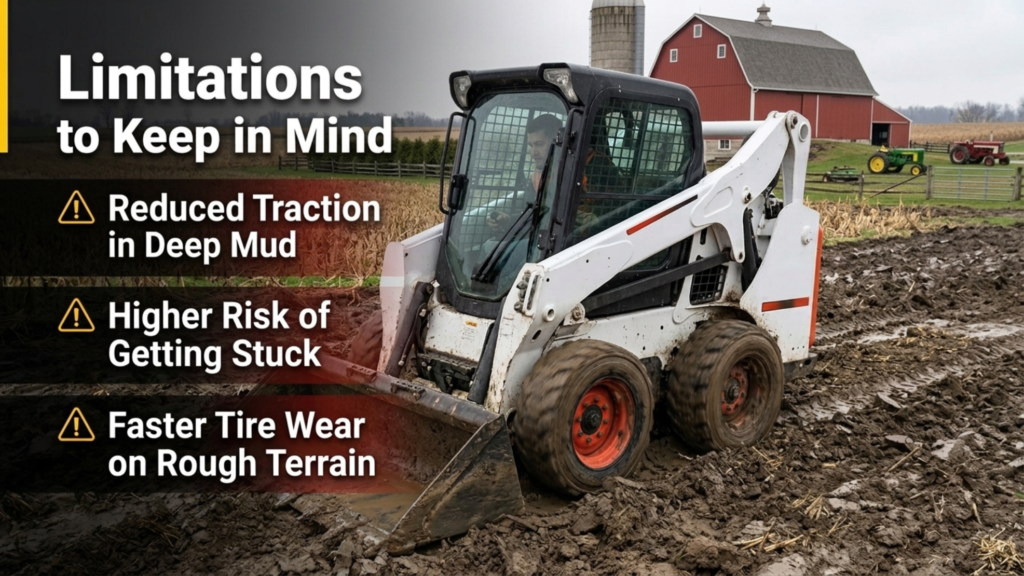
For all its strengths, a wheel skid steer has clear limits, and knowing them helps you avoid frustration and costly mistakes. The most significant limitation shows up in deep mud and soft ground. Because wheels concentrate the machine’s weight onto a small contact area, they sink more readily than tracks when the surface cannot support them. In deep, saturated mud, that reduced traction can leave the machine spinning helplessly, unable to find the grip it needs to move forward.
That tendency to sink leads directly to the next drawback: a higher chance of getting stuck. On soft, boggy, or heavily saturated sites, a wheel skid steer can bury its tires and become immobilized, and freeing a stuck machine wastes time and can damage the surrounding ground. Operators working in consistently wet or unstable conditions often find that a wheeled machine simply cannot keep up with the demands of the terrain, which is precisely where tracked machines earn their keep.
Rough terrain also takes a toll on tires. Sharp gravel, jagged rock, debris, and abrasive surfaces wear tires down faster and raise the risk of punctures, which adds to operating costs and downtime over the long run. Keeping these limitations in view helps you plan around them:
- Reduced traction in deep mud can leave the machine spinning without progress.
- A higher chance of getting stuck on soft, saturated, or unstable ground.
- Increased tire wear on sharp, rocky, or abrasive surfaces.
None of these drawbacks rule out a wheel skid steer, but they define where it struggles. When your work regularly involves deep mud or persistently soft ground, weigh these limits carefully, since they point toward conditions where a different machine may serve you better.
Tips for Operating a Wheel Skid Steer Safely on Rough Ground
Getting the most out of a wheel skid steer on difficult terrain comes down to preparation and technique. The right tires make an enormous difference, so match them to the conditions you face. Aggressive, deep-tread tires bite harder in mud and on loose surfaces, while solid or foam-filled tires resist the punctures that sharp debris and rocky ground threaten. Starting with tires suited to your site protects both traction and uptime, and it is one of the simplest ways to improve safety on rough ground.
How you operate the machine matters just as much as how you equip it. Maintaining a steady, controlled speed keeps the skid steer stable and gives you time to react to ruts, dips, and obstacles. Rushing over uneven ground invites loss of control, while a measured pace lets the machine settle smoothly into the terrain. Keep loads low during travel to hold the center of gravity down, approach slopes straight on rather than across the face, and avoid sudden turns that can break traction on loose or slick surfaces.
Reading the ground before you commit to it prevents most serious trouble. A quick walk-around and a careful eye can reveal hazards that would otherwise catch you off guard. Follow these practical steps for safer operation:
- Select the right tires for the conditions, whether that means aggressive tread for mud or puncture-resistant tires for rocky sites.
- Maintain a safe, steady speed to keep control over ruts and bumps.
- Avoid overly soft or saturated areas where the machine is likely to sink or get stuck.
- Inspect the terrain first, checking for hidden holes, unstable ground, and debris before you begin.
Put these habits into practice, and a wheel skid steer performs safely and productively across a wide range of demanding surfaces. Preparation and disciplined operation turn rough ground from a hazard into a manageable part of the job.
Conclusion
A wheel skid steer handles muddy and uneven terrain far better than its reputation sometimes suggests, as long as you understand where it excels and where it reaches its limits. On firm, rough ground and shallow mud over a solid base, the machine delivers speed, agility, and lower operating costs that make it a dependable, cost-effective choice. Its weaknesses appear in deep mud and persistently soft ground, where reduced traction, the risk of getting stuck, and faster tire wear become real concerns. The key is matching the machine to your conditions, equipping it with the right tires, and operating with steady, deliberate technique. Assess your terrain honestly, prepare the machine properly, and a wheel skid steer will work safely and productively across most of the challenging ground your job site throws at it.
Frequently Asked Questions: Track vs. Wheel Skid Steer
Q: When should I choose a wheel skid steer over a track skid steer? Choose a wheel skid steer when your work takes place primarily on firm, stable surfaces such as packed gravel, concrete, asphalt, or dry compacted soil. Wheeled machines travel faster between tasks, respond more nimbly to operator inputs, and cost less to maintain over time since tires are far cheaper to replace than rubber or steel tracks. If your job site is mostly solid underfoot and speed of movement between work areas matters to your productivity, a wheel skid steer will outperform a tracked machine in those conditions. It is also the better option when you frequently move between indoor and outdoor surfaces, since wheels cause less damage to finished floors and paved areas than tracks.
Q: When should I choose a track skid steer over a wheel skid steer? Choose a track skid steer when your work regularly takes place on soft, wet, or unstable ground. Tracks spread the machine’s weight over a much larger surface area, which reduces ground pressure and prevents the sinking and spinning that wheels struggle with in deep mud, saturated soil, or loose terrain. If your job site consistently involves boggy ground, freshly graded earth, or surfaces where a wheeled machine would regularly get stuck, a track skid steer is the more dependable and productive choice. It also causes less surface damage, making it preferable on sites where ground preservation matters.