Currently Empty: $0.00
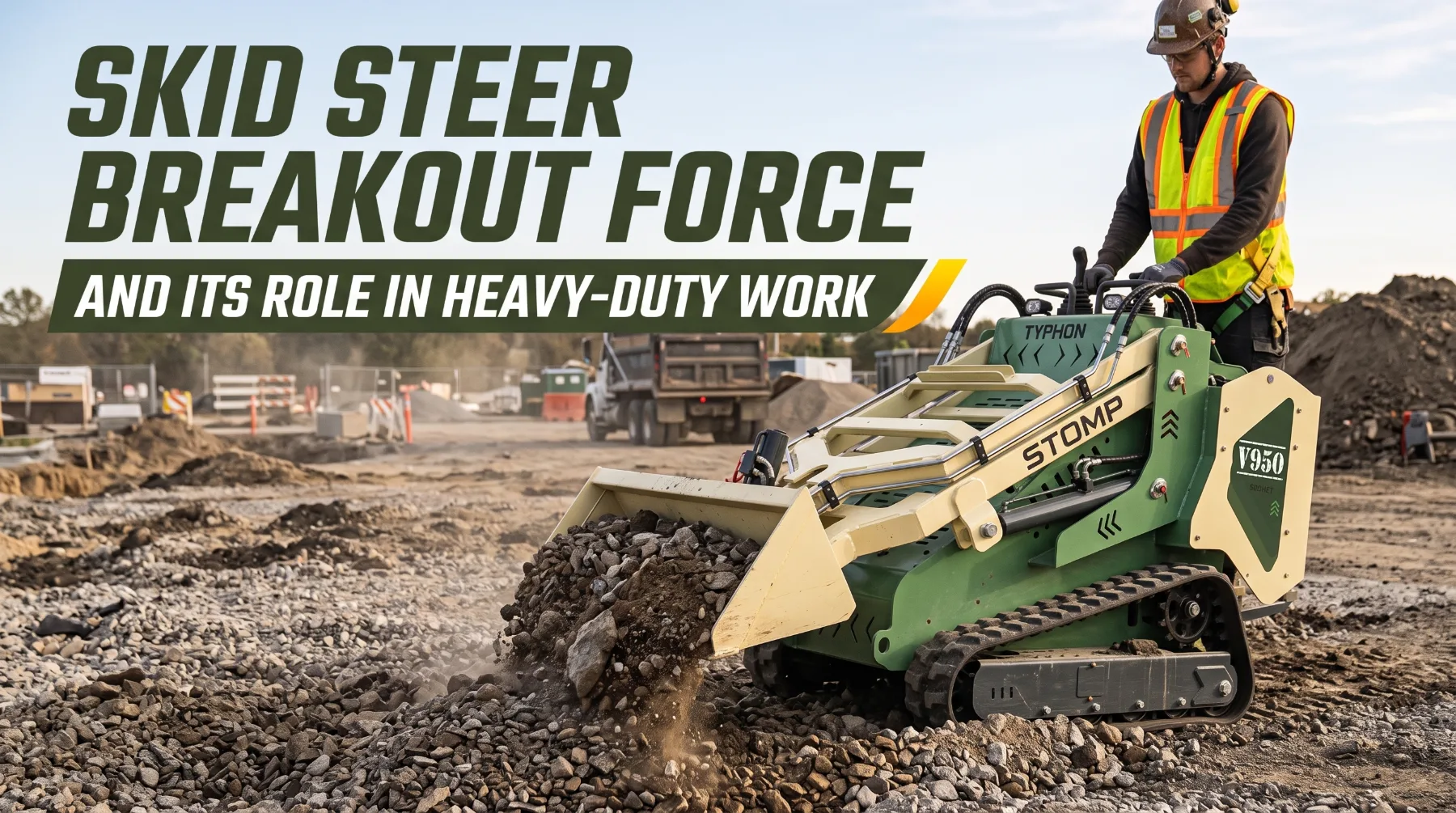
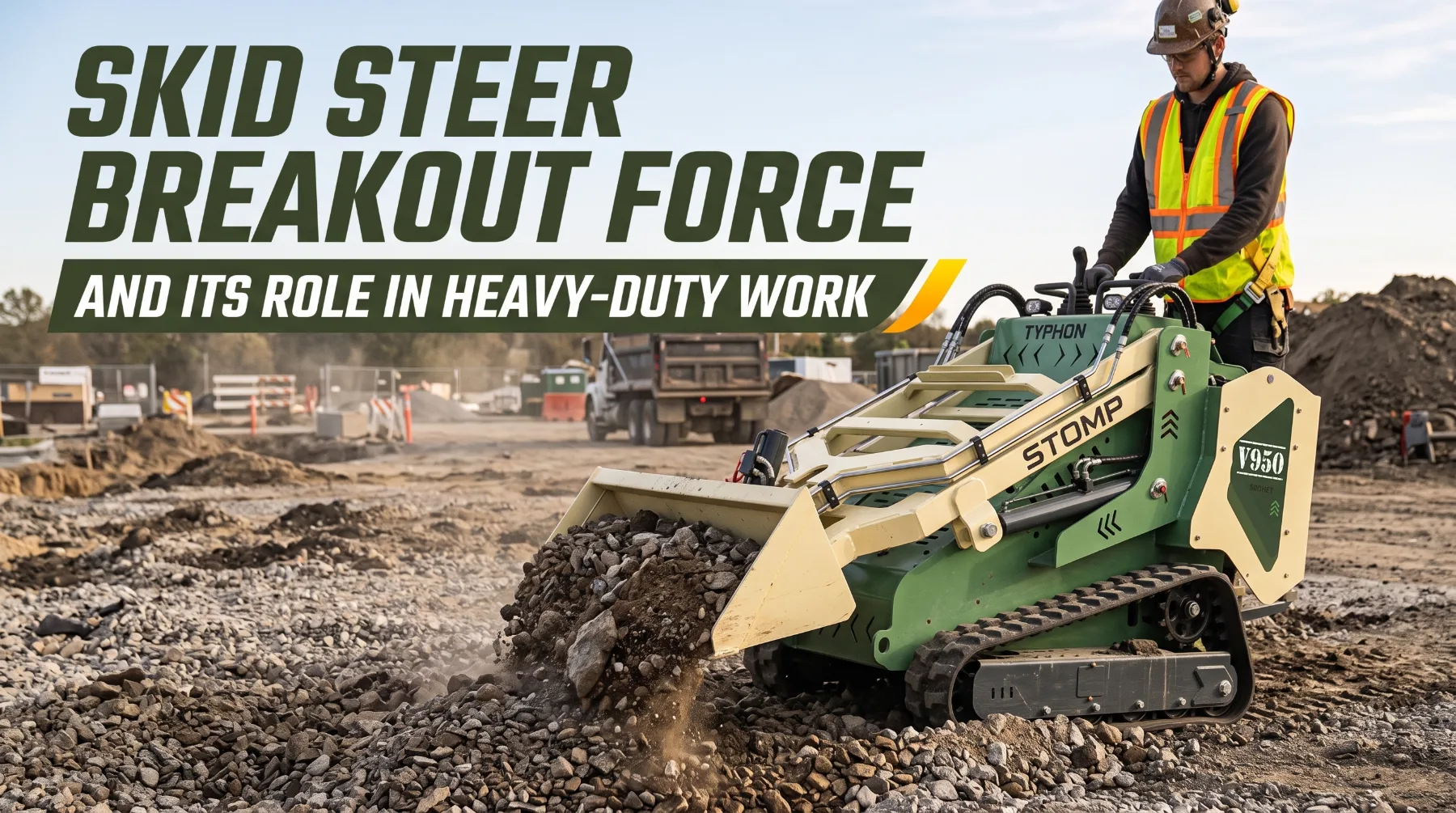
Removing a heavily compacted gravel base can quickly expose the limits of a skid steer's digging capability. Years of truck traffic may compress the material into a dense layer that resists the bucket, causing the machine to stall, spin its tires, or struggle to fill the bucket. A skid steer with greater breakout force can approach the same material, penetrate the compacted layer, and pull a fuller bucket from the pile more effectively.
Breakout force describes the force available at the bucket or attachment during digging and curling. It depends on factors such as hydraulic pressure, cylinder size, lift-arm geometry, and machine design. Higher breakout force can help the skid steer overcome resistance when working in dense gravel, compacted soil, or other difficult materials.
Matching breakout force to the material and task can improve productivity on demanding jobsites. Contractors should consider the ground conditions, attachment type, required bucket capacity, and expected digging resistance when evaluating a skid steer. The right combination of machine capability and attachment can help reduce repeated passes and keep excavation or material removal work moving efficiently.
What Skid Steer Breakout Force Means
Breakout force is the force available at the attachment during work such as digging into compacted material or breaking a loaded bucket free from resistance. It is usually measured at the bucket's cutting edge, where the machine meets the material.
Think of the moment a bucket pushes into a dense pile. The material resists, and the loader has to overcome that resistance to fill the bucket and pull the load away. Breakout force shows how much effort the machine can apply at that point. A higher rating generally means the skid steer can dig into harder material and pull free with less struggle.
Manufacturers often list breakout forces in two ways. Bucket breakout force comes from the tilt cylinders curling the bucket. Lift arm breakout force comes from the lift cylinders raising the arms. Both describe how effectively the machine can apply force during demanding work. Check how a manufacturer measures and reports the figure before you compare models, since testing methods can vary.
Key takeaway: Breakout force is the force available at the attachment when digging into compacted material or breaking a loaded bucket free, and it shows how effectively a skid steer can apply force during demanding work.
Hydraulic System Creates Working Force
Breakout force begins with the hydraulic system. The engine drives a hydraulic pump, which sends pressurized fluid to the cylinders that move the loader arms and tilt the bucket. That fluid pressure turns engine power into the mechanical force that pushes, curls, and lifts.
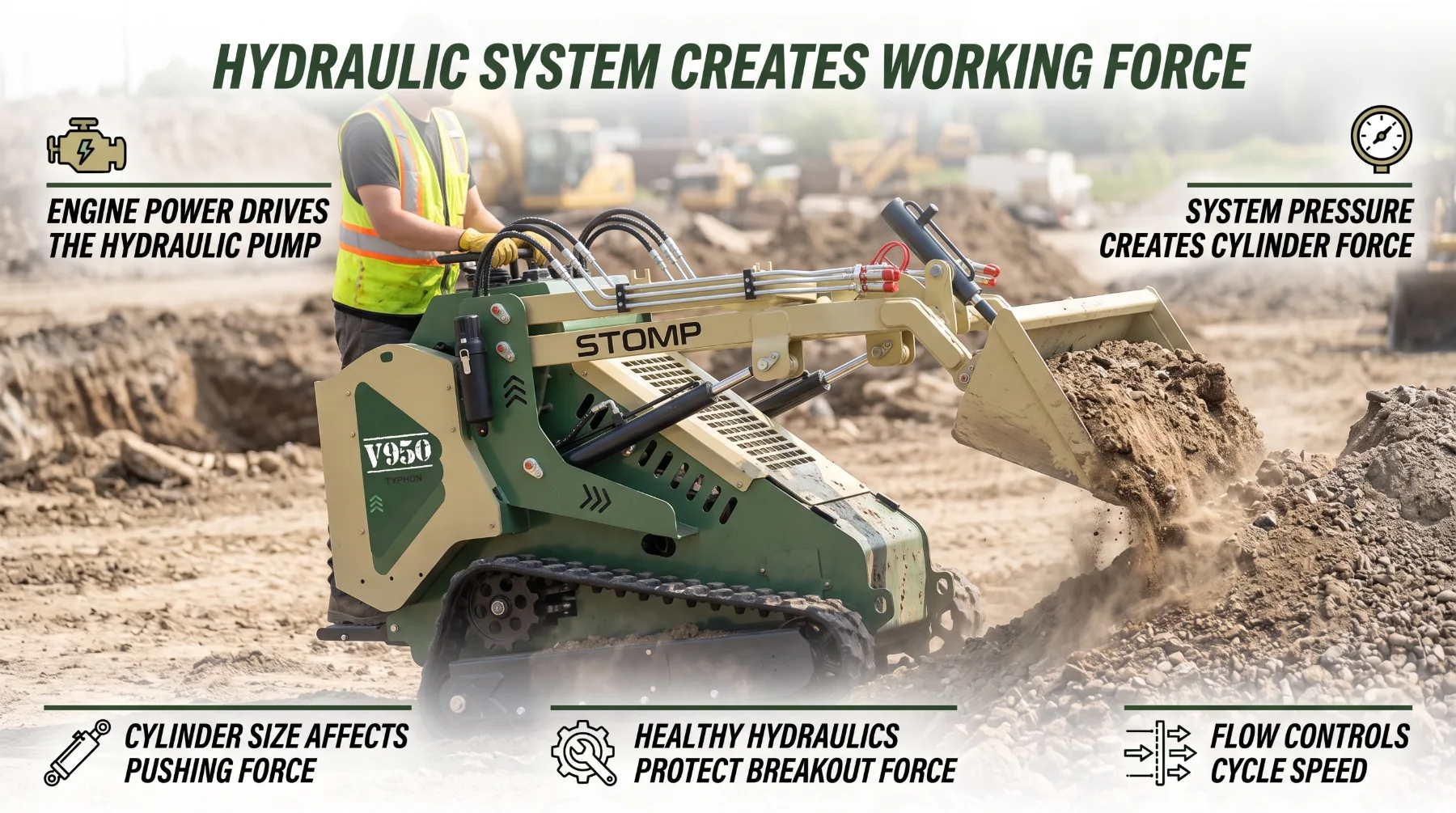
Two hydraulic factors matter most:
- Pressure: Higher system pressure lets cylinders produce more force, which directly supports breakout capability.
- Flow: Flow controls how quickly cylinders and attachments move. It affects cycle speed more than raw force.
Cylinder size also plays a role. A larger cylinder bore spreads hydraulic pressure across more surface area, which produces more pushing force. Together, pressure, cylinder design, and system condition decide how much force the machine can deliver at the bucket.
System health matters as much as design. Worn pumps, leaking cylinder seals, low fluid levels, and contaminated fluid can all reduce working force. Inspect hoses, fittings, and cylinders regularly, keep fluid at the correct level, and follow the manufacturer's service intervals to protect breakout performance.
Key takeaway: The hydraulic system turns engine power into mechanical force through pressure and cylinders, so hydraulic performance and system condition are central to breakout capability.
Bucket Digging Applications
Bucket work is where breakout force shows its value most clearly. Every time a bucket enters compacted soil, gravel, or a dense pile, the machine has to push through resistance, fill the bucket, and pull the load free.
Common heavy-duty bucket tasks include:
- Digging into hard-packed soil and old gravel bases
- Loading from dense aggregate and crushed stone piles
- Excavating clay and rocky ground
- Removing compacted fill during site preparation
With enough breakout force, the operator can fill the bucket in fewer passes and pull material away cleanly. Without it, the machine may stall, spin its tires or tracks, or fill only part of the bucket. That slows cycle times and adds wear to the drivetrain.
Technique still counts. Enter the pile with the bucket level, push steadily, and curl the bucket as it fills rather than forcing straight ahead. Matching the bucket type to the material helps as well. A heavy-duty or rock bucket with a sturdy cutting edge or teeth can penetrate dense material more effectively than a general-purpose bucket.
Key takeaway: When a bucket penetrates compacted soil, gravel, or dense piles, sufficient breakout force helps the operator fill the bucket and pull material away from resistance.
Loader Geometry Affects Force
Breakout force doesn't come from the hydraulic system alone. The way the loader arms, linkages, and attachment are arranged shapes how that force reaches the bucket during each stage of a digging or lifting cycle.
Loader arm design is one major factor. Skid steers generally use either radial-lift or vertical-lift arm paths. Radial-lift designs move the arms in an arc and are often favored for digging and pushing at lower heights. Vertical-lift designs keep the load closer to the machine as it rises, which suits loading at greater heights. Each design applies force differently through its range of motion.
Linkage geometry and attachment position also matter. Force at the cutting edge changes as the bucket curls, as the arms rise, and as the load moves farther from the machine's pivot points. A bucket with a longer floor or a heavier attachment can shift leverage and change the force available at the edge.
Breakout performance depends on more than one component. Hydraulics, arm design, linkage layout, and attachment choice all work together. Review these factors as a complete package when comparing machines.
Key takeaway: Loader arm design, linkage geometry, and attachment position influence how force is applied throughout a digging or lifting cycle, so breakout performance depends on more than one component.
Breakout Force vs Lift Capacity
Breakout force and lift capacity are often listed side by side, but they describe different parts of skid steer performance. Confusing the two can lead to choosing a machine that doesn't fit the job.
Breakout force relates to the machine's ability to penetrate material or pull it free from resistance. It matters most when digging, scraping, or loading from dense piles.
Lift capacity relates to how much weight the loader can raise and handle. It is usually expressed as rated operating capacity, which reflects the load the machine can carry safely without tipping. Lift capacity matters most when moving pallets, carrying heavy materials, or loading trucks.
A machine can rate well on one and less well on the other. A skid steer with strong breakout force can rip through compacted gravel but still be limited in how much weight it can safely lift and carry. A machine built for lifting may handle heavy pallets well but struggle in hard digging. Always stay within the manufacturer's rated operating capacity, no matter how much breakout force the machine produces.
Key takeaway: Breakout force relates to penetrating or pulling material free, while lift capacity relates to how much weight the loader can raise and handle, so the two describe different aspects of performance.
Matching Force to Heavy-Duty Applications
Heavy-duty work places many demands on a skid steer. Compacted soil, aggregate piles, excavation, loading, and demanding attachments all call for strong performance, but breakout force is only one part of the picture.
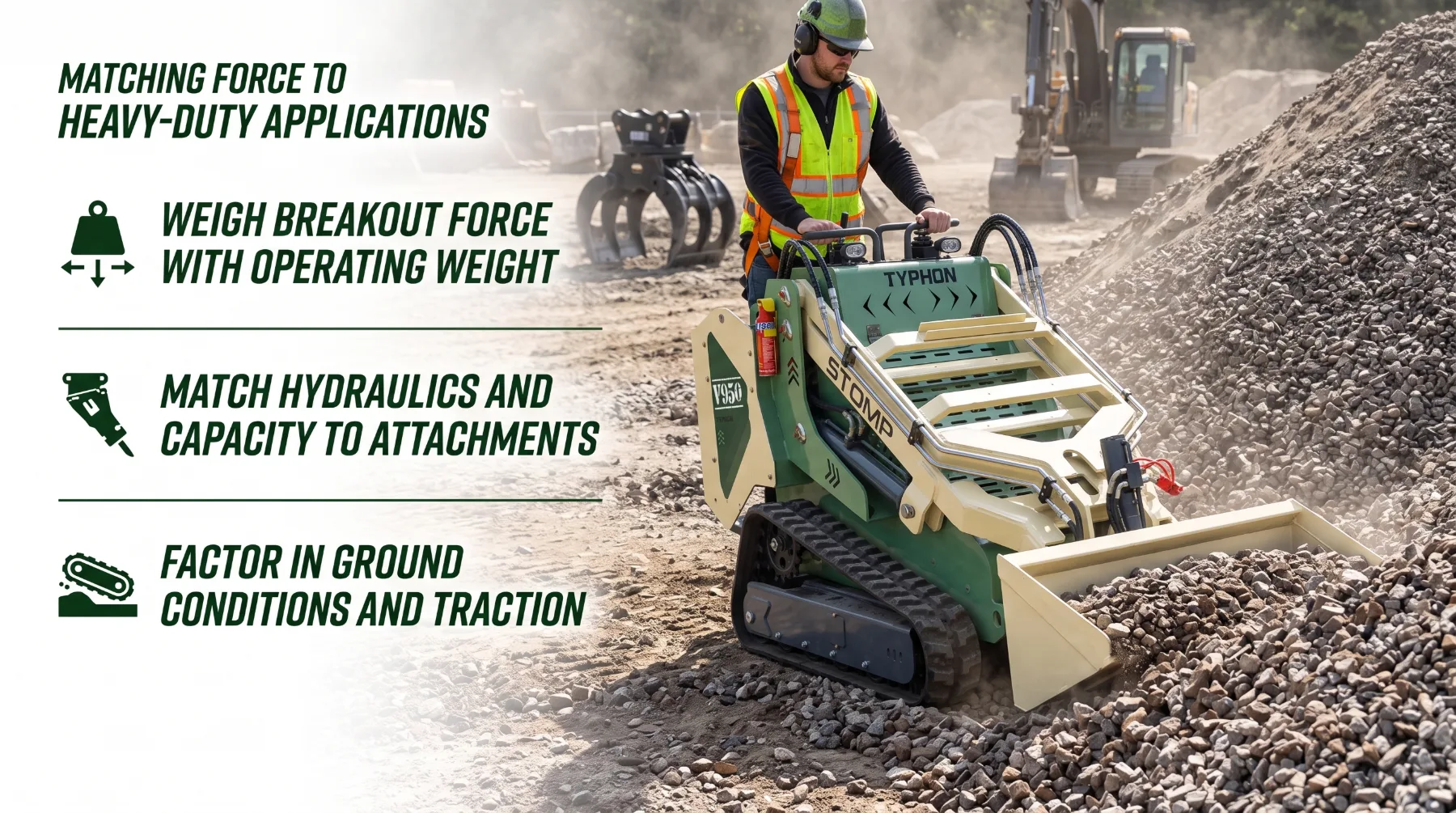
Weigh these factors together when choosing a machine:
- Breakout force: Supports digging into dense, resistant material.
- Operating weight: A heavier machine provides more traction and stability to put force to work.
- Hydraulic performance: Pressure and flow affect working force and attachment operation.
- Lift capacity: Determines how much weight the machine can safely handle.
- Attachment requirements: Breakers, grapples, and other tools have their own hydraulic and capacity needs.
- Site conditions: Soil type, moisture, slope, and surface affect traction and performance.
Traction deserves special attention. High breakout force does little if the machine can't stay planted. On loose or wet ground, a tracked machine or heavier operating weight may help the skid steer use its available force. Match the full specification set to the work you do most often, and confirm requirements with the equipment supplier when needed.
Key takeaway: Consider breakout force alongside operating weight, hydraulic performance, lift capacity, attachment requirements, and site conditions when matching a skid steer to heavy-duty work.
Conclusion
Breakout force describes the force available at a skid steer's attachment when penetrating compacted material or pulling a loaded bucket free, with hydraulic pressure, cylinder force, loader geometry, and attachment position determining how that force is generated and applied. It differs from lift capacity, which defines how much weight the loader can raise, so both specifications should be evaluated for demanding digging and material-handling work. Before operation, operators should check hydraulic fluid condition, hoses, fittings, cylinders, bucket teeth or cutting edges, tires or tracks, and quick coupler components for wear, leaks, or damage, while confirming that the attachment suits the material and the machine's rated operating capacity matches the planned loads. Ground conditions should also be assessed for traction and stability, particularly during heavy digging. Evaluating breakout force alongside hydraulic performance, loader geometry, operating capacity, attachment requirements, and site conditions provides a more complete basis for assessing skid steer performance in demanding applications.
Frequently Asked Questions
What is the breakout force on a skid steer?
Breakout force is the force a skid steer can generate at the attachment when digging into material or pulling a loaded bucket free from resistance. It is commonly measured at the bucket cutting edge and reflects the machine's ability to overcome resistance during digging, scooping, and material handling. Higher breakout force can help the attachment penetrate compacted ground and fill the bucket more effectively.
Why is breakout force important for heavy-duty work?
Breakout force is important when working in compacted soil, dense gravel, hard-packed material, or other conditions that resist penetration. Strong breakout force allows the bucket to enter the material more effectively and helps pull loaded material away from the ground. This can support fuller bucket loads, reduce repeated digging attempts, and improve productivity during demanding excavation and loading tasks.
Is breakout force the same as lift capacity?
No. Breakout force and lift capacity describe different aspects of skid steer performance. Breakout force refers to the digging and pulling force available at the attachment, while lift capacity refers to how much weight the loader can raise and handle safely. A machine can have strong breakout performance without having the same rating for lifting heavy loads, so both specifications should be considered for the intended work.
What affects skid steer breakout force?
Several factors influence breakout force, including hydraulic pressure and flow, loader arm geometry, attachment position, machine design, and operating conditions. The bucket's position and angle can change the leverage available during digging, while hydraulic performance determines the force the cylinders can generate. Material hardness, ground conditions, and proper attachment selection can also affect real-world breakout performance.