Currently Empty: $0.00
Spider Excavator Service Life and Long-Term Ownership Considerations
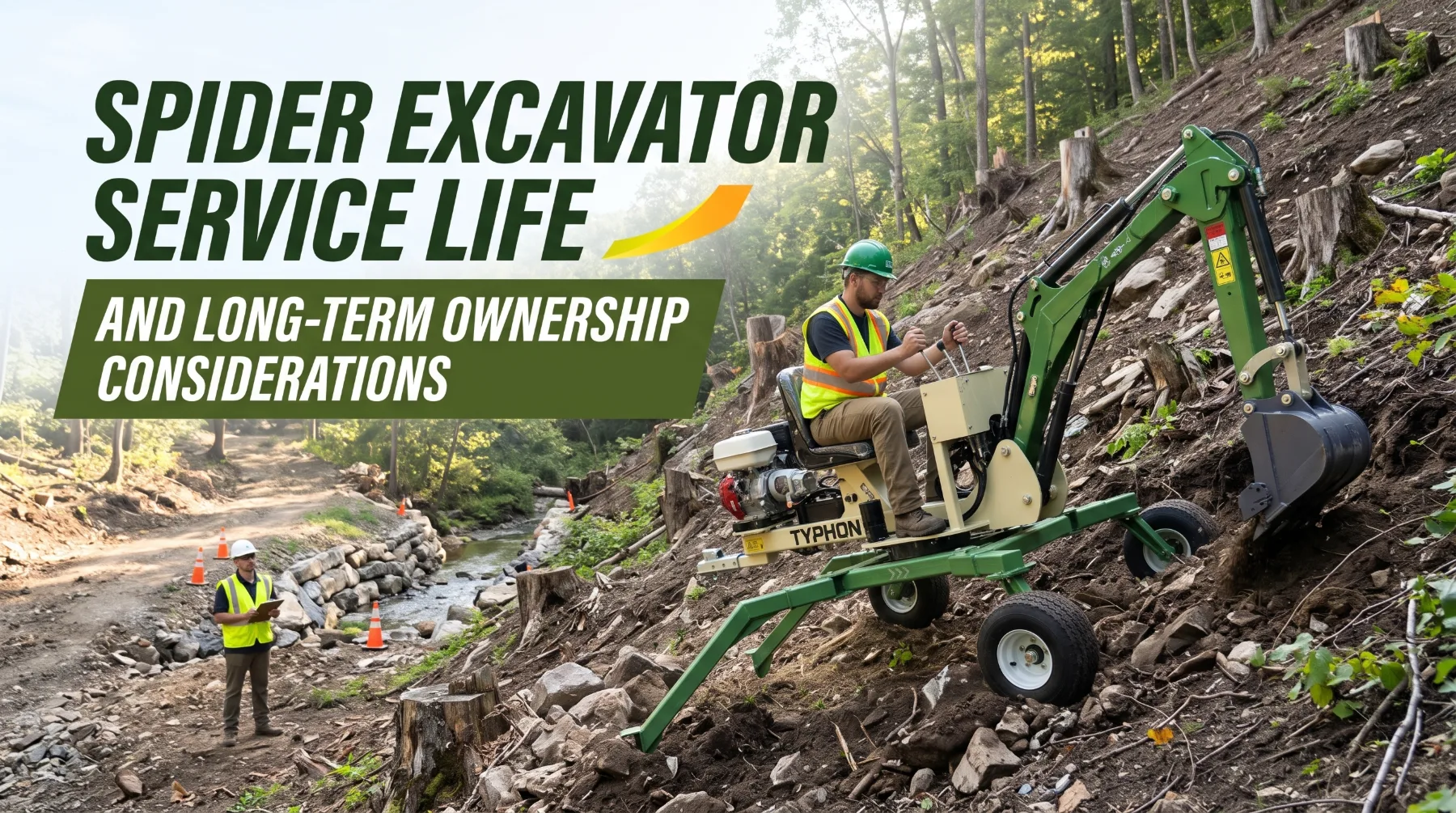
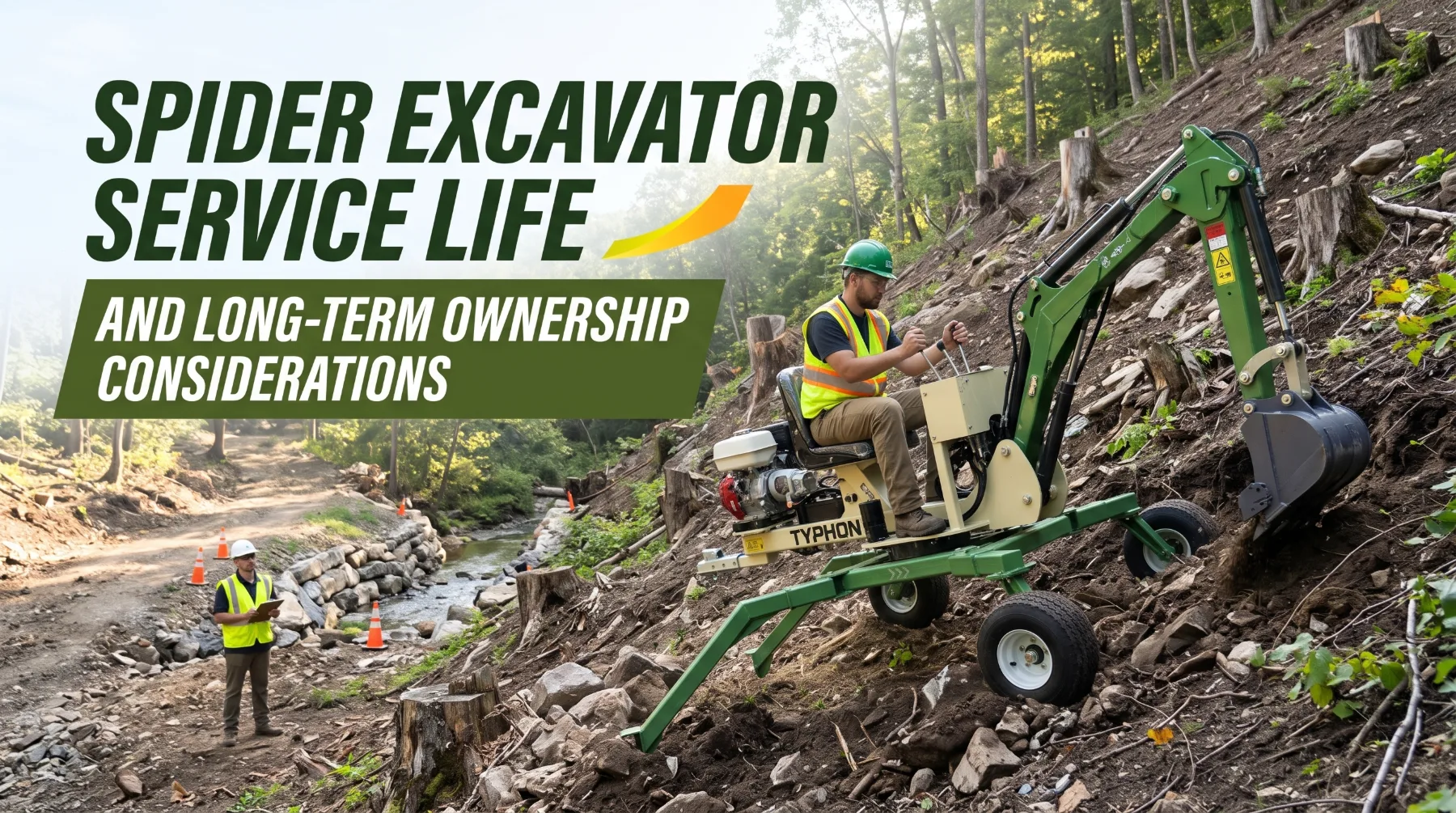
A spider excavator can climb a steep riverbank, straddle a ditch, or set its legs on a rocky slope where a conventional excavator would never get a stable footing. That reach into difficult terrain is exactly why contractors buy one. It is also why ownership calls for more care. Every hour on uneven ground, in mud, or across a slope puts loads on legs, joints, hydraulics, and structural connections that a standard machine rarely sees.
A spider excavator’s long-term value depends on more than its purchase price. Maintenance quality, operating conditions, component durability, operator skill, and access to parts and service all shape how many productive years the machine delivers. Buyers who plan for these factors up front can protect their investment and keep downtime low.
Understand the Machine’s Working Environment
Spider excavators are built for places other machines struggle to reach. They work on steep slopes, uneven ground, woodland and forestry sites, riverbanks, wetlands, mountain roads, and areas with limited access. Their adjustable legs let them level the upper structure and spread their weight across difficult ground.
Those same conditions shape how the machine wears. Operating on a slope shifts loads onto certain legs, joints, and pins. Rocky ground raises impact stress on wheels, feet, and tracks. Mud, water, and plant debris pack into moving parts and speed up wear on seals and bushings. Forestry work adds risks from branches, stumps, and falling material, while wet sites expose components to constant moisture.
Before you plan a maintenance program, look closely at where the machine will spend most of its hours. A spider excavator that works mostly on moderate slopes in dry soil will wear differently from one that spends its days in streambeds or on steep, rocky hillsides. Matching service intervals and inspection routines to real conditions helps you catch wear early. Operating within the manufacturer’s limits also cuts the unnecessary stress that shortens component life.
Key takeaway: Terrain decides how a spider excavator wears. Match inspection and service routines to the slopes, ground types, and moisture levels the machine faces most often.
Follow Engine Maintenance Schedules
The engine powers every function on a spider excavator, from digging and slewing to leg positioning and travel. Regular engine service is one of the simplest ways to protect long-term reliability. Skipped oil changes and neglected filters often lead to the expensive failures owners most want to avoid.
Follow the service intervals in the operator’s manual for engine oil, oil filters, fuel filters, and air filters. Check oil and coolant levels before each shift with the machine parked as level as the site allows. Inspect belts, hoses, and the cooling system for wear, cracks, and leaks. Keep radiator and cooler fins clean, because woodland debris, dust, and seeds can block airflow quickly and cause overheating.
The working environment can change your intervals. Dusty sites call for closer attention to air filtration and may need shorter filter replacement cycles. Wet or cold conditions make fuel quality and water separation more important. Slope work can also affect how fluids sit in the engine, so follow the manufacturer’s guidance on operating angles and fluid checks. Many owners add periodic oil analysis to spot internal wear before it becomes a failure. Keep a written record of every service, since a complete history supports warranty claims and resale value.
Key takeaway: Service the engine on schedule, adjust intervals for dust, moisture, and debris, and keep complete maintenance records to protect reliability and resale value.
Inspect Hydraulic Components
Hydraulics control almost everything on a spider excavator. The system drives the boom, arm, bucket, and slewing functions. Depending on the design, it also positions the legs, adjusts the machine’s stance, and powers travel. A spider excavator often has more hydraulic cylinders, hoses, and connections than a conventional excavator of similar size, which means more points to inspect.
Check hydraulic fluid level and condition according to the manufacturer’s procedure. Then walk around the machine and inspect hoses, fittings, cylinders, and visible connections. Look for wet spots, fresh oil on the frame, cracked or bulging hoses, and abrasion where hoses rub against metal or flex during leg movement. Leg cylinders deserve close attention, since they work through wide motion ranges and are exposed to mud, rock, and water near ground level.
Watch for changes in how the machine behaves. A leg that drifts, slow or uneven cylinder movement, unusual noise from the pump, or pressure-related warnings all signal a problem. Stop and investigate these issues before continuing, because a hydraulic fault during slope work can affect stability. Never run your hand along a hose to find a leak, since pressurized fluid can penetrate skin. Replace filters on schedule, use the specified hydraulic fluid, and keep couplers and fittings clean during service.
Key takeaway: Inspect hoses, fittings, and cylinders often, especially on the legs. Address drifting legs, abnormal movement, or pressure warnings before you continue operating.
Check Legs, Tracks, and Structural Parts

The legs and undercarriage give a spider excavator its unique ability. They also carry the heaviest and most varied loads on the machine. Support legs, joints, pins, bushings, wheels, feet, tracks, and mounting points all flex and absorb impact as the machine climbs, stabilizes, and digs on uneven ground.
Inspect these areas regularly. Look for cracks around welds, mounting brackets, and high-stress joints. Check pins and bushings for looseness, excessive play, and uneven wear. Inspect wheels, feet, or tracks for cuts, damage, and missing components, and check track tension where tracks are fitted. Grease every lubrication point at the intervals the manufacturer specifies. Spider excavators often have many grease points across the legs and joints, and skipping even a few can lead to early pin and bushing failure.
Cleaning makes inspection possible. Mud, clay, and plant debris hide cracks and leaks, and packed material adds weight and wear to moving parts. Wash the legs and undercarriage at the end of each shift when conditions allow, especially after wet or forestry work. Also check the slewing ring, the protective structure, and the cab for damage. Never drill, weld, or modify structural components or the protective structure without manufacturer approval, since changes can weaken them and affect certification.
Key takeaway: Inspect legs, joints, pins, tracks, and mounting points often, grease every lubrication point on schedule, and keep the undercarriage clean so wear is easy to spot.
Consider Parts and Service Support
A spider excavator is a specialized machine. When it needs a seal kit, a leg cylinder, or a specific pin, you can’t always pick up a replacement from a general parts counter. Long-term ownership depends on how quickly you can get the right parts and qualified help.
Before you buy, ask direct questions. Which filters, seals, hoses, pins, and wear parts are stocked, and where? How long does it take to receive parts that aren’t in stock? Is technical support available by phone, and are trained technicians available for field service? What does the warranty cover, for how long, and what maintenance records does it require? Request the recommended service intervals and the full maintenance schedule in writing.
Plan for your own operation as well. Keep a stock of common service items such as filters, fluids, grease, and frequently replaced wear parts, especially if you work in remote areas. Make sure your technicians or operators have access to service manuals and know the machine’s specific procedures. A dependable support relationship reduces downtime, protects warranty coverage, and helps the machine hold its value over time.
Key takeaway: Confirm parts availability, technical support, warranty terms, and service intervals in writing before purchase, and keep common service items on hand.
Operate Within Rated Limits
A spider excavator can work in places that seem impossible, but every machine has defined limits. The manufacturer sets ratings for slope operation, stability, lifting capacity, transport, and attachment use. Staying within those limits is essential for both safety and service life.
Know the rated slope angles for travel and for working, along with any limits on how the legs and boom can be positioned on uneven ground. Use the leg adjustments to level and stabilize the machine before digging or lifting, rather than relying on boom movement to hold balance. Follow the load charts for lifting, and remember that capacity changes with boom position, leg configuration, and slope. Avoid overloading the bucket or using the machine to push, pry, or drop loads in ways the manufacturer doesn’t permit.
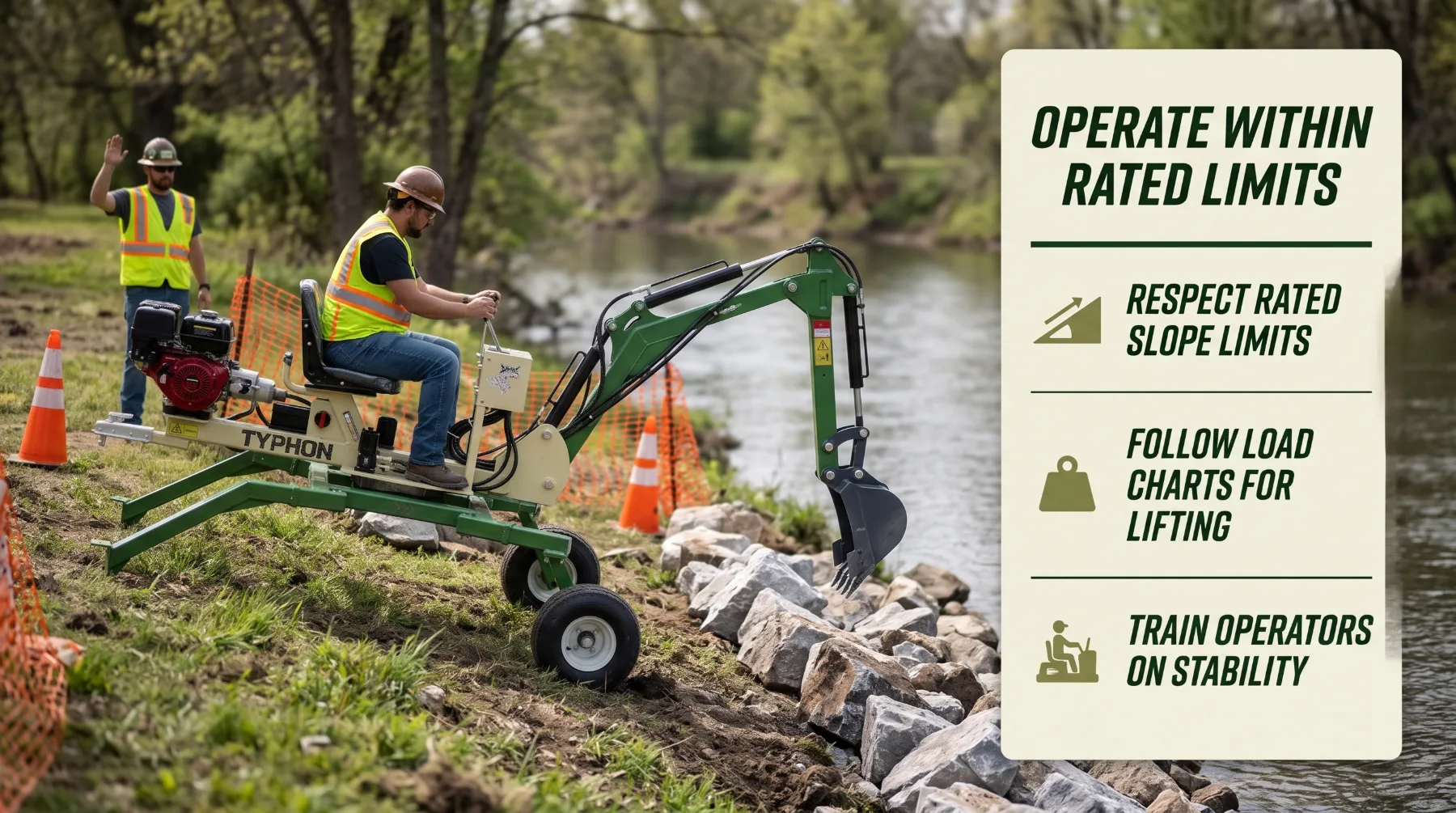
Attachments need the same care. Confirm that each attachment’s weight, hydraulic flow, and pressure needs match the machine’s ratings. Operator skill plays a major role as well. Spider excavators handle differently from conventional machines, and proper training on leg positioning, slope work, and stability helps prevent incidents and reduces wear. Operators should wear the seat belt, plan their path before moving, and stop whenever ground conditions look uncertain.
Key takeaway: Follow the manufacturer’s limits for slopes, lifting, and attachments, and invest in thorough operator training to protect both people and the machine.
Conclusion
A spider excavator’s service life depends on maintenance quality, operating conditions, operator habits, and access to replacement parts and technical support. Uneven terrain, dust, moisture, and demanding applications can create different wear patterns, so inspection and servicing should reflect the conditions in which the machine works. Regular engine maintenance helps protect power and reliability, while hydraulic inspections can identify leaks, damaged hoses, and performance issues before they lead to costly repairs. The legs, pins, joints, and structural components also require close attention because they experience repeated movement and stress on uneven ground. Following the manufacturer’s lubrication schedule, checking fasteners, and addressing unusual movement or wear early can help maintain stability and dependable safe operation. Buyers should review the recommended maintenance intervals and consider whether local conditions require more frequent inspections or cleaning. Parts availability, service access, warranty coverage, and technical support are equally important when evaluating long-term ownership costs. Requesting the complete maintenance schedule, replacement parts information, and warranty terms for the exact spider excavator model helps clarify ongoing responsibilities and support arrangements. A well-planned maintenance approach can reduce unexpected downtime, extend component life, and keep the machine ready for demanding work over the long term.
Frequently Asked Questions
How long does a spider excavator last?
Service life varies with design, operating hours, maintenance quality, terrain, and workload. Machines that are serviced on schedule, operated within rated limits, and inspected regularly typically deliver more productive years.
Which components need regular inspection?
Check the engine, hydraulic system, support legs, joints, pins, bushings, tracks or wheels, slewing ring, and structural connections. Leg cylinders and grease points deserve particular attention.
Does steep terrain affect service life?
Yes. Difficult terrain increases stress on legs, joints, and hydraulics, especially when the machine is operated outside its rated limits. Proper leg positioning and adjusted maintenance intervals help reduce that wear.
What should buyers ask about after-sales support?
Ask about replacement parts availability and delivery times, technical support, field service, service procedures, recommended intervals, and warranty terms. Request the answers in writing.
