Currently Empty: $0.00
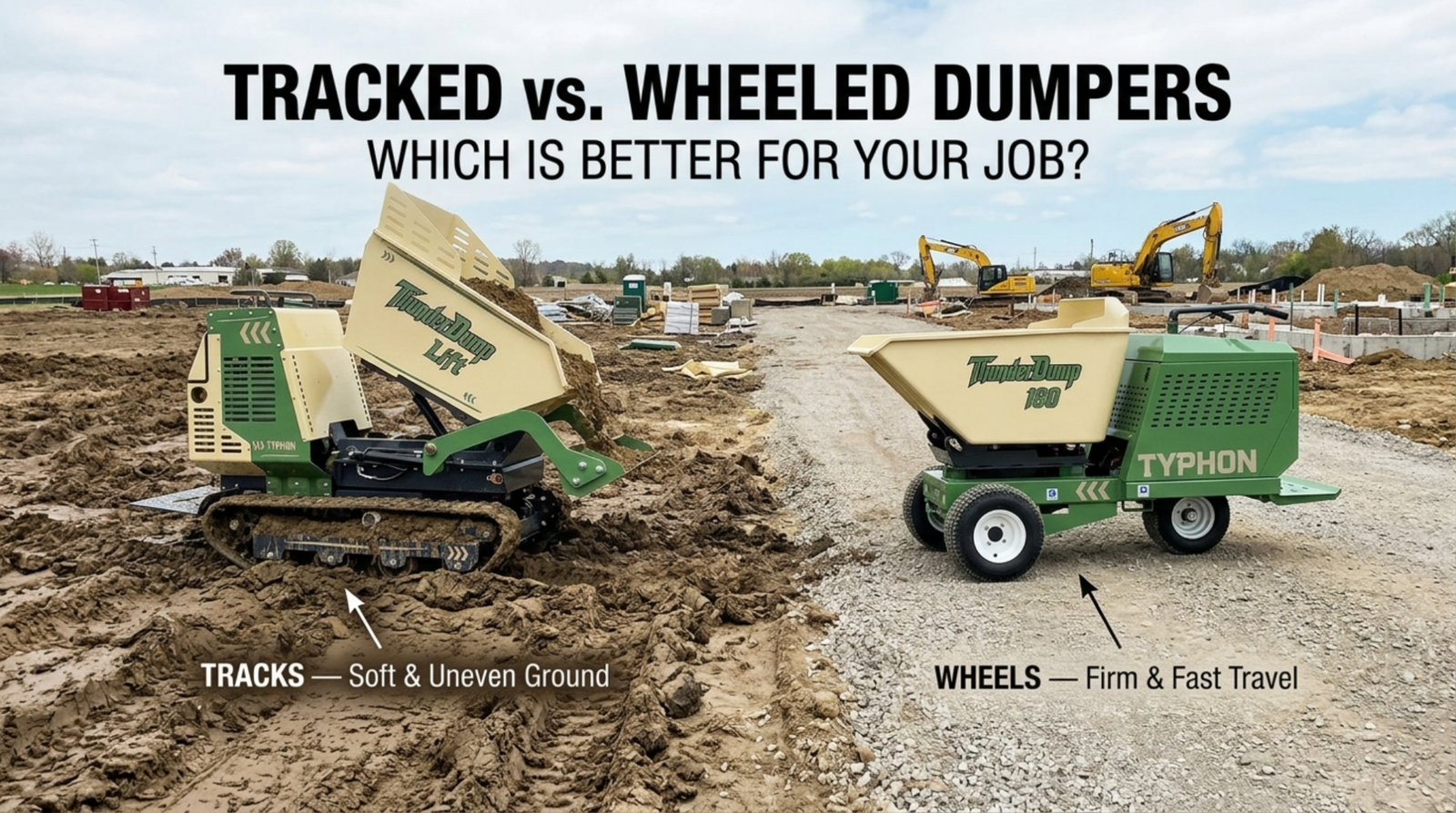
Tracked vs. Wheeled Dumpers: Which Is Better for Your Job?
Choosing between a tracked and a wheeled dumper is one of the first decisions that shapes how efficiently your site runs. The wrong pick leaves a machine stuck in mud, crawling across pavement it wasn’t built for, or wasting hours on trips it should breeze through. The right pick keeps material moving, protects your schedule, and reduces wear on the equipment you rely on every day.
Both designs move material, but they solve different problems. Tracks grip soft, unstable ground where wheels would sink or spin. Wheels roll fast across firm surfaces where tracks would only slow you down. This guide compares the two across traction, speed, terrain, maneuverability, and overall fit, so you can match the machine to the job with confidence. By the end, you’ll know exactly which configuration belongs on your next project.
Tracked Dumpers for Soft and Uneven Ground
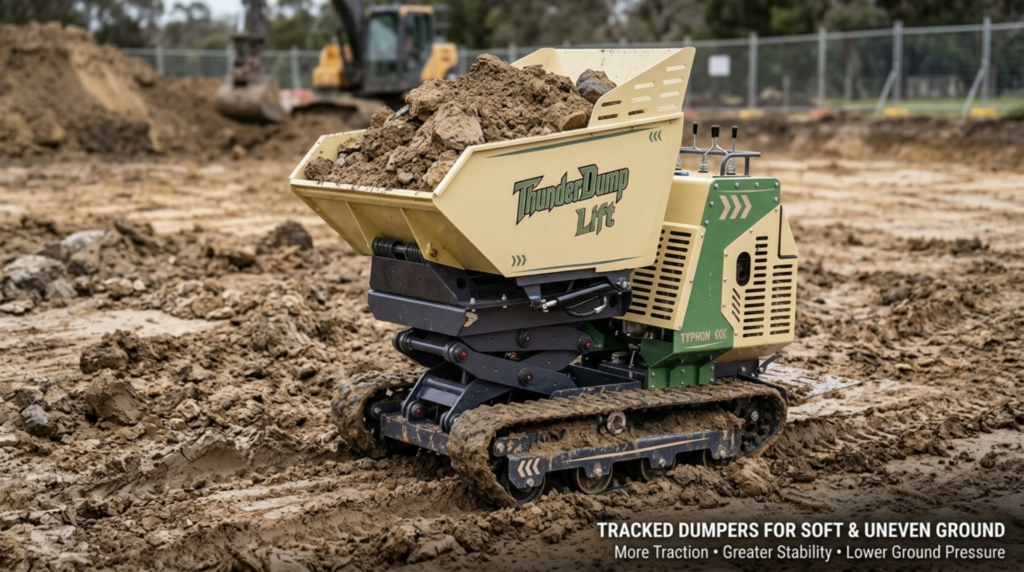
Tracked dumpers earn their reputation on the ground that stops other machines cold. When a site turns to mud, loose fill, or churned-up earth, tracks deliver the traction that keeps material moving. The wide track surface grips into soft terrain rather than spinning on top of it, so the dumper pulls forward where a wheeled machine would dig itself into a rut. That grip is a genuine productivity advantage on sites where conditions rarely stay clean and firm.
Stability is the second reason tracks perform so well on difficult ground. A tracked dumper spreads its footprint over a large contact area, which keeps the machine planted on uneven or sloping surfaces. On rough terrain full of dips, ridges, and soft spots, that broad base resists the tipping and rocking that make a load hard to control. Operators can carry material across ground that would feel unpredictable on wheels, which matters most when the surface changes from one pass to the next.
Lower ground pressure ties these strengths together and adds a third benefit. Because the machine’s weight is distributed across the full length of both tracks, the pressure on any single point stays low. This reduces the risk of sinking on soft surfaces such as saturated soil, freshly placed fill, or boggy sections of a site. It also causes less disturbance to delicate ground, which helps when you need to protect a prepared surface or minimize rutting. The result is a machine that stays mobile in conditions that would strand a wheeled dumper. For earthworks, landscaping on soft ground, and sites exposed to wet weather, a tracked dumper delivers the dependable footing that keeps a project on track when the terrain works against you.
Wheeled Dumpers for Faster Travel
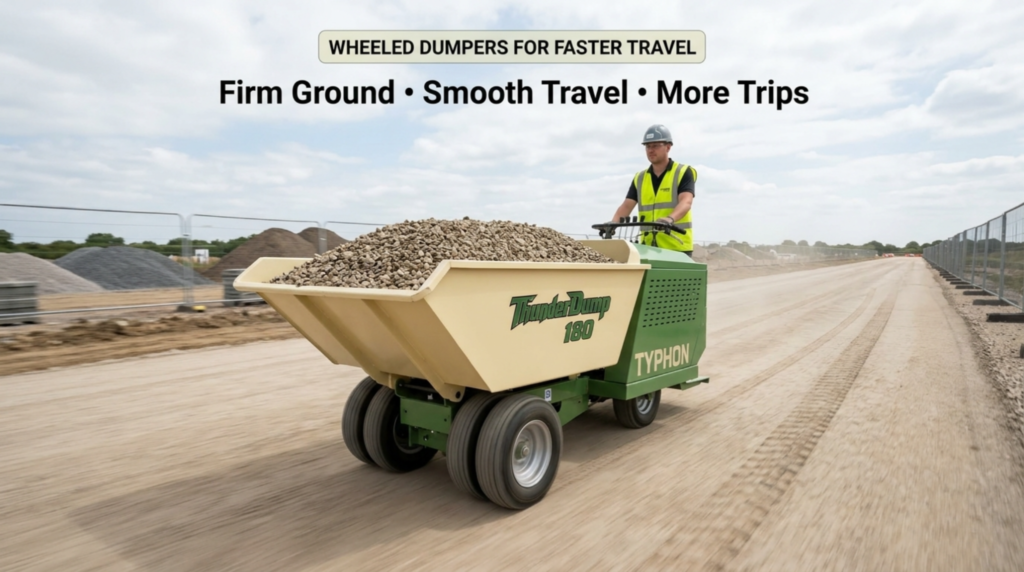
Wheeled dumpers shine wherever the ground is firm and the work demands movement. On prepared surfaces, compacted haul roads, gravel, and paved areas, wheels roll smoothly and quickly, carrying material from one point to another with far less effort than tracks require. For projects where the dumper spends much of its day traveling rather than crawling through difficult terrain, that speed translates directly into more trips completed and more work done per shift.
The advantage grows on jobs that require frequent movement between locations. Many sites involve hauling material across considerable distances, shuttling loads between a stockpile and a work area, or repositioning the machine throughout the day. A wheeled dumper handles this pattern with ease, covering ground at a pace tracks simply can’t match. Where a tracked machine would eat into your schedule with slow travel, a wheeled unit keeps the cycle brisk, which is exactly what high-volume, movement-heavy operations need.
Smoother travel brings practical benefits beyond raw speed. Wheels ride comfortably across firm, level ground, which reduces the jolting that can shift a load or fatigue an operator over a long day. On established roads and hard surfaces, the machine moves cleanly without the ground disturbance tracks can cause on finished areas. Wheeled dumpers also tend to be simpler and more economical to maintain on firm surfaces, since they avoid the wear tracks accumulated when run on abrasive, hard ground.
The trade-off is clear: wheeled dumpers depend on decent footing to perform. On mud or soft fill, they lose the very speed that makes them valuable. But when your site offers firm, prepared surfaces and your work calls for steady travel between locations, a wheeled dumper delivers the efficient, reliable movement that keeps material flowing and your project moving forward.
Terrain and Ground Conditions
The surface your dumper operates on is the single biggest factor in choosing between tracks and wheels. Before weighing anything else, look honestly at the ground the machine will face most often. A configuration that excels on one surface can become a liability on another, so matching the design to your actual terrain protects both productivity and the equipment itself.
Different surfaces point clearly toward one option or the other. Consider how each type of ground shapes the decision:
- Mud and soft soil favor tracks, which grip and float over surfaces where wheels sink and spin
- Slopes and uneven terrain suit tracks, whose broad footprint keeps the machine stable and planted
- Gravel and loose aggregate can work for either, though tracks handle looser, deeper material better
- Concrete and paved surfaces favor wheels, which roll fast and avoid the wear tracks suffer on hard ground
Most real jobsites aren’t uniform, which is where the decision gets practical. A single project may include a muddy excavation area, a firm gravel haul road, and a paved access route all at once. The key is to identify the condition the dumper will spend the most time working in, since that dominant surface should drive your choice. A machine chosen for the toughest ground it must cross regularly will keep working when conditions turn difficult, even if it gives up some speed elsewhere.
Weather and site changes deserve attention too. Ground that stays firm in dry conditions can turn to mud after rain, and a site’s surface often shifts as work progresses. If your project runs through wet seasons or involves frequent earthmoving, the ground may be far softer in practice than it appears on a dry planning day. Factoring in these realities, rather than judging by ideal conditions, leads to a more dependable choice and fewer costly surprises once the machine is on site.
Maneuverability and Access
Both tracked and wheeled dumpers can work in confined areas, but they handle those spaces very differently, and understanding the difference helps you match the machine to how you actually operate. Maneuverability isn’t just about size. It’s about how the machine steers, turns, and positions itself in the space and terrain your job presents.
Wheeled dumpers offer quick, responsive steering that suits jobs with regular travel and frequent direction changes. On firm ground, they turn and reposition easily, which makes them practical where operators move the machine often and need to place loads precisely without fuss. In open yards, along established roads, and across prepared surfaces, that agile handling keeps the work rhythm fast. When the priority is nimble movement and steady relocation on solid footing, a wheeled dumper feels natural and efficient to operate.
Tracked dumpers approach access differently, trading outright speed for controlled, deliberate movement over challenging ground. Their handling excels where terrain, not tight corners, is the main obstacle. On soft, uneven, or sloping surfaces, a tracked machine moves with steady control, holding its line and its footing where a wheeled unit might slip or struggle. This makes tracks the better fit for confined spaces that also happen to be difficult underfoot, such as tight excavation zones or landscaped areas with unstable ground.
Before deciding, walk the spaces the dumper must work in and consider both the tightness and the surface together. Measure access points against the machine’s dimensions, note the turns it must make, and account for whether the ground in those areas is firm or difficult. A wheeled dumper rewards sites with confined but solid working areas that demand quick handling. A tracked dumper rewards confined areas where the ground itself is the challenge. Matching the machine’s handling strengths to your real access conditions keeps every phase of the work moving without frustration or delay.
Choosing Based on the Job
Neither tracked nor wheeled dumpers win every contest, so the smart approach is to match the machine to the specific demands of your project rather than searching for one that does everything. The better choice emerges when you weigh several factors together and let the whole picture guide the decision instead of fixating on any single feature.
Five considerations shape the right call:
- Terrain: soft, uneven, or sloping ground favors tracks, while firm, level surfaces favor wheels
- Travel distance: long or frequent trips favor the speed of wheels, while short moves over rough ground suit tracks
- Ground conditions: wet, unstable, or sensitive surfaces call for the low ground pressure of tracks
- Load requirements: match the machine’s capacity to your typical loads regardless of configuration
- Usage pattern: consider how the dumper will be used across the entire project, not just one phase
Think about how these factors combine in practice. A dumper working an earthmoving site through a wet season, crossing soft ground with short hauls, points firmly toward tracks. A dumper shuttling material along firm haul roads across a large, prepared site, making frequent trips all day, points just as firmly toward wheels. Most decisions become clear once you identify the conditions the machine will face most often and choose for that dominant reality.
It also pays to think about the full life of the project rather than a single stage. Sites evolve as work progresses, and a machine chosen only for opening conditions may struggle later. Consider your toughest regular demands, allow a sensible margin for changing weather and ground, and weigh whether speed or stability matters more to your overall workflow. When you align the dumper’s strengths with the genuine requirements of the job, you gain dependable performance, protect your schedule, and get lasting value from the machine across every phase of the work.
Conclusion
The choice between tracked and wheeled dumpers comes down to one honest question: what does your ground demand? Tracks deliver traction, stability, and low ground pressure that keep material moving across mud, slopes, and soft terrain. Wheels deliver speed and easy handling that make firm, prepared surfaces and frequent travel far more efficient. Each design solves a different problem, and the better machine is simply the one that fits the conditions you face most often.
Before you buy or rent, take a clear-eyed look at your site. Assess the terrain, the travel distances, the ground conditions through every season, your load requirements, and how the dumper will be used across the whole project. Then choose the configuration built for that reality. Match the machine to the job this way, and you protect your budget, your schedule, and your crew while getting dependable performance on every trip.
Frequently Asked Questions
1. Are tracked dumpers always better on difficult terrain?
For soft, muddy, uneven, or sloping ground, tracked dumpers usually hold a clear advantage. Their wide track surface grips loose terrain, their broad footprint keeps the machine stable on rough or sloped surfaces, and their lower ground pressure reduces the risk of sinking on soft ground. That combination lets a tracked machine keep working where a wheeled unit would slip, spin, or bog down. However, “difficult” should be defined by your actual conditions. If the challenging area is firm gravel rather than mud, wheels may still perform well. Judge the specific surface the dumper must cross, and tracks earn their place wherever the ground itself is the main obstacle.
2. Why are wheeled dumpers faster than tracked models?
Wheeled dumpers roll across firm surfaces with far less resistance than tracks, which lets them travel at higher speeds and cover ground more quickly. This makes them ideal for jobs that involve long hauls, frequent trips between locations, or regular repositioning on prepared surfaces. On compacted roads, gravel, and paved areas, that speed adds up to more completed cycles per shift and better productivity on movement-heavy work. The trade-off is that wheels depend on decent footing to deliver this speed. On mud or soft fill, they lose their advantage and can struggle, so their faster travel pays off specifically on firm, established ground.
3. Which type works better on a site with mixed surfaces?
Most real jobsites include a mix of surfaces, so the key is identifying the condition the dumper will spend the most time working in. That dominant surface should drive your choice. If the machine spends most of its day on soft, wet, or uneven ground, tracks are the safer choice even if part of the site is firm. If it spends most of its time traveling firm haul roads and paved areas with only occasional rough patches, wheels will serve you better overall. Also account for how the site changes over time and through the seasons, since ground that starts firm can turn soft after rain or heavy work.
4. Do tracked and wheeled dumpers differ in maneuverability?
Yes, though the difference is about handling character rather than raw size. Wheeled dumpers offer quick, responsive steering that suits jobs with frequent direction changes and regular travel on firm ground, making them nimble in open yards and along established routes. Tracked dumpers trade some of that quickness for controlled, deliberate movement over challenging terrain, holding their footing on soft or sloping surfaces where wheels might slip. Both can operate in confined areas, but the better fit depends on whether tight corners or difficult ground is your main obstacle. Walk the spaces the machine must work in, considering both their tightness and their surface, before deciding.
5. How do I decide which dumper to choose for my project?
Weigh five factors together: terrain, travel distance, ground conditions, load requirements, and how the dumper will be used across the whole project. Soft, uneven, or sensitive ground points toward tracks, while firm surfaces and frequent long trips point toward wheels. Match the machine’s load capacity to your typical loads regardless of configuration, and think about the full life of the project rather than a single phase, since site conditions often change as work progresses. Base your decision on your toughest regular demands with a sensible margin for shifting weather and ground. When you align the machine’s strengths with your genuine requirements, you get dependable performance and lasting value.