Currently Empty: $0.00
Cab vs. Open Cabin Wheel Loaders: What’s the Difference?
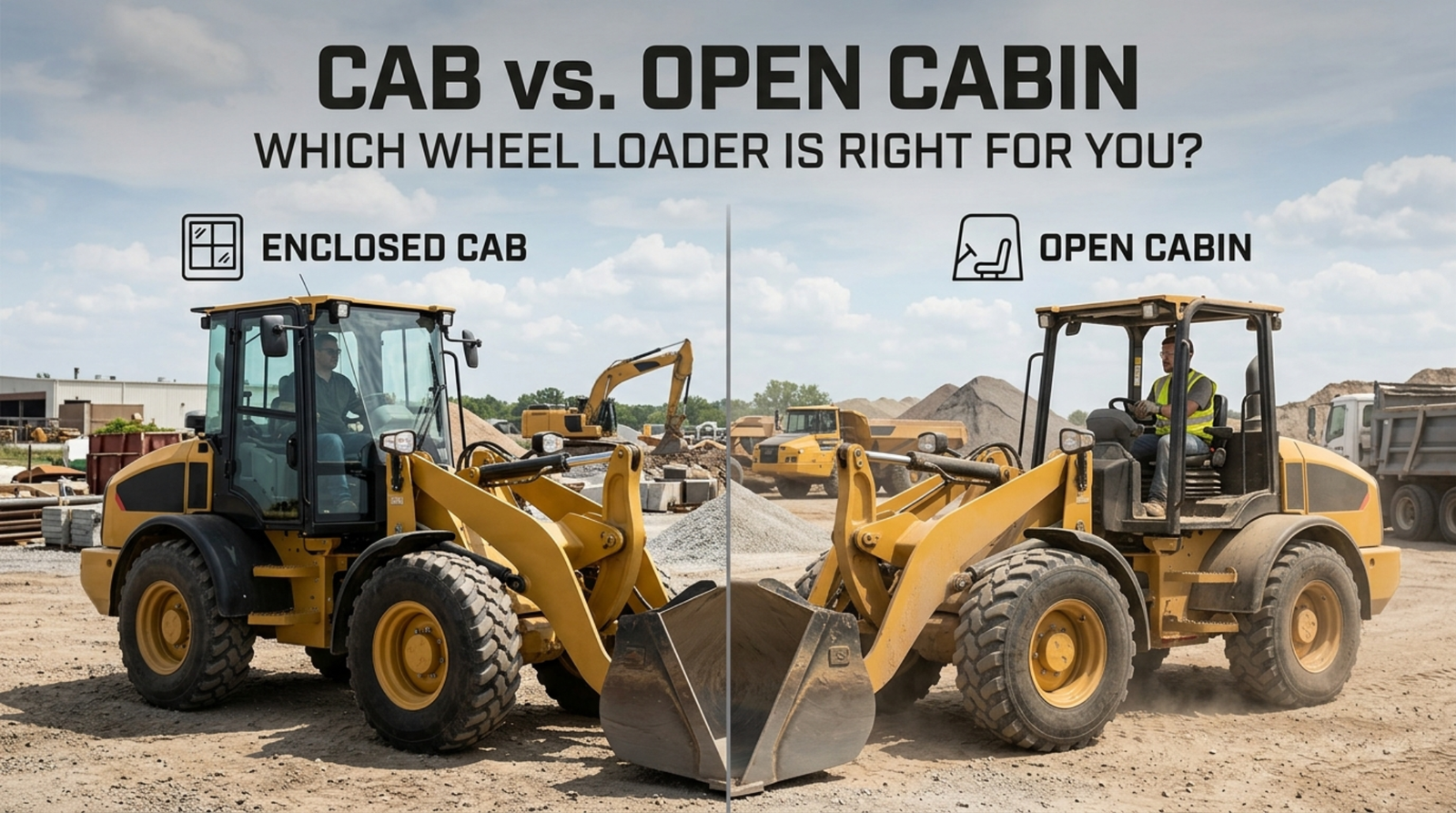
A wheel loader is a serious investment, and the cabin configuration you choose has a direct effect on how comfortable, safe, and productive your operators are every day. Some machines come with a fully enclosed cab, while others use an open cabin design, and each approach suits different kinds of work. The difference isn’t just about comfort; it touches on protection, visibility, weather handling, noise, and the overall working experience. Choosing the wrong setup can leave operators exposed to harsh conditions or paying for features they don’t need. Choosing the right one keeps them productive and protected through the demands of the job. This post breaks down five key areas where cabs and open cabins differ: operator protection and comfort, visibility and operator awareness, weather and jobsite conditions, noise and working environment, and how to choose the right cabin type. Understanding these differences helps you match the machine to the work in front of you.
Operator Protection and Comfort
The most immediate difference between a cab and an open cabin comes down to how much the operator is shielded from the surrounding environment. An enclosed cab wraps the operator in a protected space, keeping out dust, rain, wind, and the other conditions that come with working on an active jobsite. For operators who spend long hours in the seat, that protection makes a real difference in comfort and focus, allowing them to work steadily without constant exposure to the elements pressing in on them.
An open cabin takes the opposite approach, and it has its own clear advantages. Without enclosing walls and glass, an open cabin offers more airflow around the operator, which can be a welcome feature in warm conditions where a sealed space might feel stifling without climate control. Open cabins also make climbing in and out of the machine quicker and easier, a genuine benefit on jobs that involve frequent stops or short bursts of work. For mild weather and shorter-duration tasks, that easy access and open feel often outweigh the protection an enclosed cab provides.
Ultimately, the comfort each design delivers depends heavily on the working conditions. An enclosed cab shines when the environment is harsh and the shifts are long, giving the operator a stable, protected space to work from. An open cabin fits better where conditions are mild and the work is intermittent, trading full protection for airflow and convenience. Matching the cabin to the daily demands of the operator is what keeps productivity and comfort in balance.
Visibility and Operator Awareness
Clear sightlines are essential to safe wheel loader operation, and cabin design plays a direct role in how well an operator can see the work area. Open cabins are often praised for the unobstructed view they provide. With fewer pillars, frames, and glass surfaces between the operator and the surroundings, an open cabin makes it easier to see the bucket, the load, and the people or obstacles nearby. That direct line of sight helps operators stay aware of their surroundings, which supports both safety and precision during loading and maneuvering.
Enclosed cabs, however, are not the disadvantage some might assume when it comes to visibility. Modern cab designs are built with large windows, thoughtfully placed pillars, and expansive glass areas that deliver excellent visibility in every direction. A well-designed cab can offer sightlines that rival an open cabin while adding the protection that enclosed operation provides. This means operators don’t have to sacrifice awareness to gain shelter from the elements, which is an important consideration for demanding work.
The choice between the two often comes down to the specific priorities of the job. Operators who value the most direct, open view and work in conditions that don’t require enclosure may prefer the simplicity of an open cabin. Those who need strong visibility along with protection from dust, weather, or debris will find that a quality enclosed cab meets both needs at once. In either case, maintaining clear sightlines and staying aware of the surroundings remains fundamental to operating a wheel loader safely and effectively.
Weather and Jobsite Conditions
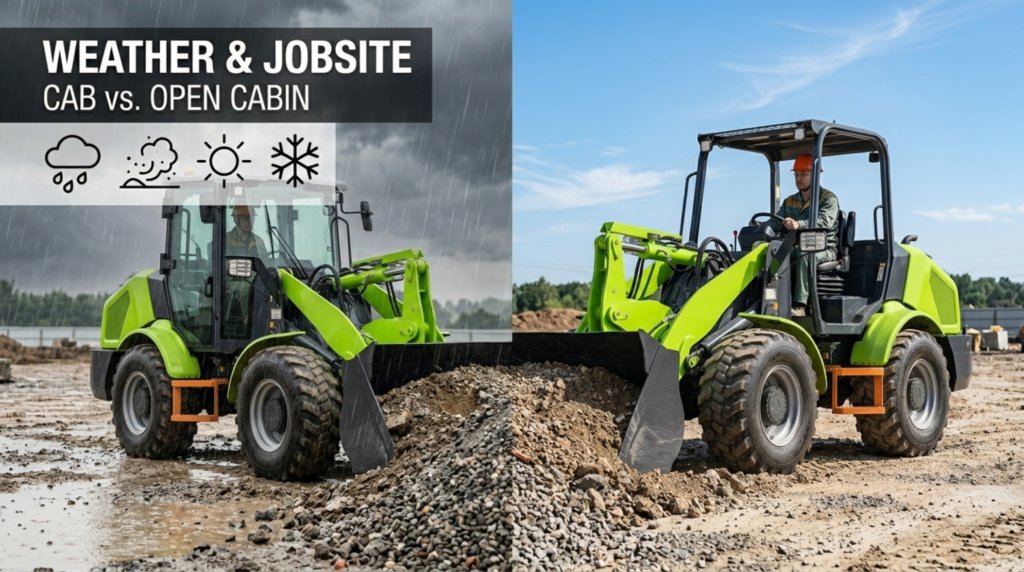
Few factors influence the cabin decision more than the weather and conditions where the machine will work. Enclosed cabs are far better suited to extreme environments, offering a sealed, controlled space that shields the operator from the worst that a jobsite can throw at them. In demanding conditions, an enclosed cab keeps operators productive and comfortable where an open cabin would leave them exposed. Cabs handle conditions such as:
- Extreme heat, especially when equipped with climate control to keep the operator cool.
- Cold weather, where an enclosed space and heating protect against freezing temperatures.
- Rain and wet conditions, keeping the operator dry through long or unpredictable shifts.
- Dusty environments, sealing out airborne debris that would otherwise fill an open cabin.
Open cabins, by contrast, are generally best suited to outdoor work in moderate and dry conditions. When the weather is mild and the environment isn’t heavy with dust or moisture, an open cabin provides a practical, comfortable setup without the need for full enclosure. The open design lets fresh air circulate freely, which many operators find pleasant during temperate weather, and it keeps the machine simpler and easier to move around.
The key is to consider the range of conditions the machine will actually face over the course of its work. Operations that deal with harsh heat, biting cold, frequent rain, or heavy dust will get far more dependable performance from an enclosed cab. Those working primarily in fair, dry weather can take advantage of the airflow and openness that an open cabin offers. Matching the cabin to the climate ensures the operator stays comfortable and the work stays on schedule regardless of the season.
Noise and Working Environment
The sound of a working wheel loader is more than a nuisance; sustained noise exposure affects operator comfort and focus over the course of a shift. An enclosed cab makes a noticeable difference here by putting a physical barrier between the operator and the machine’s engine and hydraulic systems. The walls and glass of the cab help dampen that noise, creating a quieter, more comfortable working environment. Over a long day, that reduction in sound can help operators stay more focused and less fatigued, which supports steady, careful work.
An open cabin offers no such barrier, so the operator experiences the machine’s sounds far more directly. The engine, hydraulics, and the general noise of the jobsite all reach the operator with little between them and the source. For some tasks and environments, that direct exposure is perfectly manageable, particularly during shorter jobs or in settings where noise levels are already moderate. It does, however, mean the operator is more immersed in the working sounds of both the machine and the surrounding site throughout the day.
This difference matters most when considering how many hours an operator spends in the seat and how loud the overall environment tends to be. In busy, noisy operations or during long shifts, the quieter environment of an enclosed cab helps keep operators comfortable and attentive. For intermittent work or quieter settings, the more open experience of an open cabin may pose no real drawback. Weighing the noise exposure against the nature of the work helps ensure operators can perform comfortably throughout their time on the machine.
Choosing the Right Cabin Type
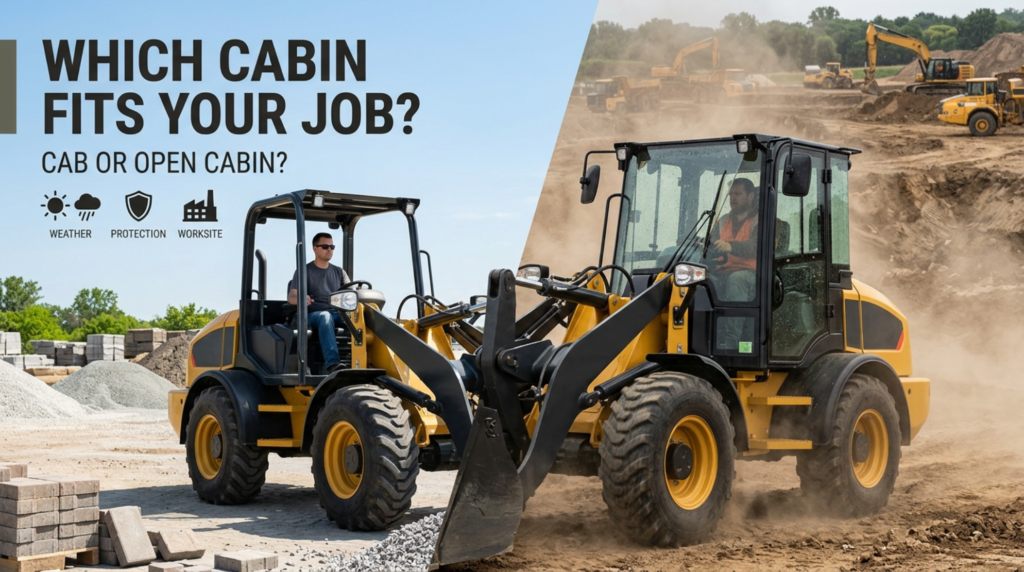
Selecting between a cab and an open cabin ultimately comes down to an honest assessment of the work the machine will do. There’s no single right answer that fits every operation, because the best configuration depends on the specific conditions, demands, and priorities involved. The goal is to match the cabin to the daily reality of the job so that operators get the protection and comfort they need without paying for features that don’t serve the work.
Several factors should guide the decision, and weighing them together points toward the right choice:
- Work environment, including whether the machine operates indoors, outdoors, or across varied sites.
- Operating conditions, such as the heat, cold, rain, and dust the machine will regularly face.
- Level of protection required, based on how long operators work and how harsh the surroundings are.
An operation that runs long shifts in extreme heat, cold, or heavy dust will benefit clearly from an enclosed cab, which keeps operators comfortable and protected through demanding conditions. A business that handles shorter tasks in mild, dry weather may find that an open cabin offers all the practicality it needs, with easy access and welcome airflow. Many buyers also consider how varied their work is, since a machine that faces a wide range of conditions often justifies the added protection of a cab.
Understanding these differences puts you in a strong position to choose a wheel loader configuration that genuinely fits your daily jobs. When the cabin matches the work, operators stay comfortable and productive, and the machine delivers the dependable performance the operation depends on.
Conclusion
Cabs and open cabins each serve a clear purpose, and the difference between them shapes how comfortable, safe, and productive your operators will be. An enclosed cab delivers strong protection from dust, rain, wind, and temperature extremes, along with reduced noise exposure and, in modern designs, excellent visibility. An open cabin offers more airflow, easier access, and an unobstructed view, making it a practical choice for mild, dry conditions and shorter-duration work. The right decision depends on the work environment, the operating conditions the machine will face, and the level of protection your operators need throughout their shifts. By understanding how these two configurations differ across protection, visibility, weather handling, and noise, you can select the setup that fits your operation and keeps your team working comfortably and efficiently every day.