

Currently Empty: $0.00
What Is a Stone Crusher Machine?
Stone Crusher Machines Explained: Uses, Applications, and Benefits
Rock in its raw form is rarely useful. Before it can build a road, form a foundation, or fill a trench, it has to be broken down into sized, workable material. That is the job of a stone crusher machine, and it is one of the most valuable pieces of equipment in the aggregate and construction chain. These machines take large, unwieldy rocks and turn them into the crushed stone and gravel that projects depend on, doing in minutes what would take a crew hours to accomplish by hand. This guide explains what a stone crusher is, how it works, where it earns its place, the benefits it delivers, and how to choose the right one for your operation. By the end, you will understand these machines well enough to make a confident, informed decision.
What Is a Stone Crusher Machine?
A stone crusher machine is equipment built to break large rocks and stones into smaller, more manageable sizes for construction and a range of industrial applications. It takes raw, oversized material straight from a quarry, a demolition site, or a stockpile and reduces it into usable products such as crushed stone, gravel, and fine aggregate. In its simplest terms, the machine bridges the gap between rock as it comes out of the ground and the sized material a project actually needs, turning a raw resource into a finished, workable one.
The core role of the machine is size reduction, and that role matters more than it might first appear. Construction and industrial work rarely uses stone in its original form. Roads need graded aggregate, concrete needs specific stone sizes, and drainage systems need clean, consistent gravel. A stone crusher produces exactly these materials by processing large rock into smaller fractions, sorted and sized for their intended use. Without this step, most raw stone would be unusable for the demanding specifications modern projects require.
Stone crushers come in a range of sizes and configurations, from compact units suited to smaller sites to large industrial plants processing enormous volumes. What unites them all is that central purpose of reducing rock into smaller, useful sizes efficiently and reliably. On any operation that consumes crushed stone or aggregate, the crusher becomes a foundational machine, since it converts an abundant but raw material into the sized products that construction, quarrying, mining, and landscaping all depend on. Understanding this core function is the starting point for appreciating everything else these machines offer.
How Stone Crusher Machines Work
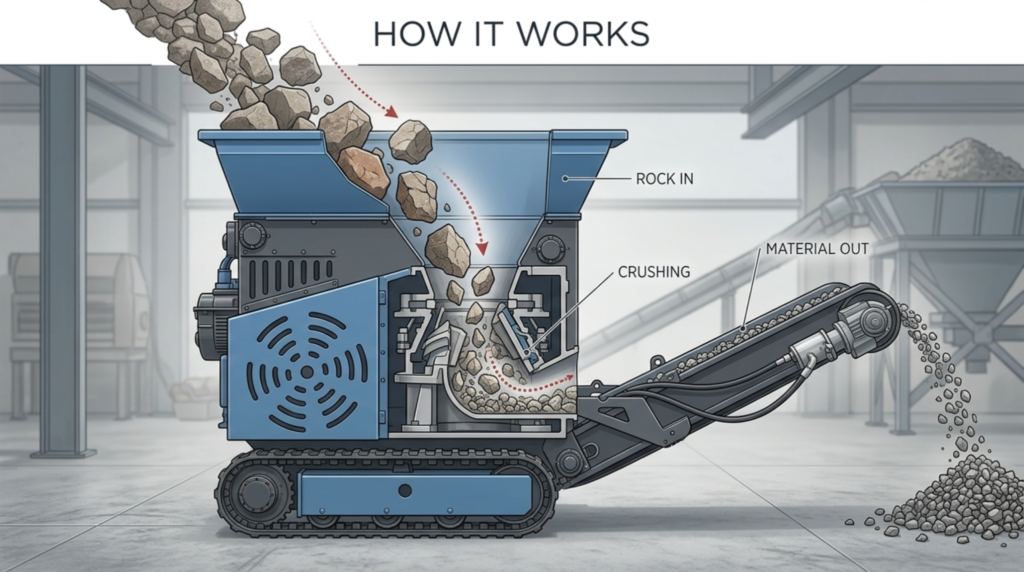
Stone crushers reduce rock by applying mechanical force, and they do this through a few distinct actions: crushing, compression, and impact. Each of these methods breaks stone in a different way. Compression works by squeezing rock between two hard surfaces until it fractures, much like pressing a nut in a nutcracker. Impact breaks stone by striking it with force, shattering the material against fast-moving parts or hard surfaces. Crushing more broadly describes the overall reduction of rock into smaller pieces through applied mechanical pressure. Together, these mechanisms turn large, solid rock into sized fragments.
The reason different crushers use different mechanisms comes down to the material being processed and the output required. Not every rock responds the same way to force, and not every job needs the same finished size. Compression-based machines tend to suit hard, abrasive stone and produce coarser material, making them well suited to primary crushing where large rock is reduced in a first stage. Impact-based machines often work well on softer or medium materials and can produce a more shaped, uniform product, which suits later stages where a finer or more consistent aggregate is needed.
This variety is why matching the crushing mechanism to the work is so important. Consider how the choice depends on your needs:
- Material hardness determines whether a compression or impact action will break the stone most effectively without excessive wear.
- Required output size guides whether you need a machine for coarse primary reduction or finer secondary shaping.
- The processing stage influences the mechanism, since primary, secondary, and finishing stages each call for different crushing actions.
Because each mechanism has strengths suited to particular materials and output goals, many operations use more than one type in sequence, feeding rock through successive stages to reach the final specification. Understanding how these mechanisms differ helps you see why crusher selection is never one-size-fits-all, but rather a matter of matching the machine’s crushing action to the material and the result you need.
Common Applications of Stone Crushers
Stone crushers appear across a wide range of industries, and their value is clearest wherever raw rock must be turned into usable crushed material. Road construction is one of the most significant applications. Building and maintaining roads demands large quantities of graded aggregate for sub-bases, surfaces, and drainage layers, and crushers produce exactly this material on the scale that road projects require. A steady supply of properly sized stone keeps roadwork moving and ensures the finished surface meets specification.
Building projects rely on crushers just as heavily. Construction of every kind consumes crushed stone and aggregate for concrete, foundations, fill, and structural work, and the crusher supplies these materials in the sizes each application needs. In quarrying, the machine is central to the entire operation, processing extracted rock into the marketable crushed products that quarries sell. Mining depends on crushers too, reducing ore and rock as part of extracting and processing valuable material from the ground.
Two further applications round out the picture of where these machines work:
- Aggregate production: dedicated aggregate operations use crushers to manufacture the sized crushed stone, gravel, and sand that supply construction markets across a region.
- Landscaping: crushers produce the decorative stone, gravel, and graded material used in gardens, pathways, drainage features, and hardscaping projects.
Across all of these settings, the common thread is the need to convert large, raw rock into consistent, sized material that a project can actually use. Whether the end product is road base, concrete aggregate, marketable quarry stone, processed ore, or landscaping gravel, the crusher performs the essential step of reducing rock to specification. This broad usefulness explains why stone crushers are found everywhere from major mining operations and busy quarries to construction sites and landscaping projects, adapting their output to whatever the application demands. Their versatility across industries makes them a genuinely foundational piece of processing equipment.
Key Benefits of Stone Crusher Machines
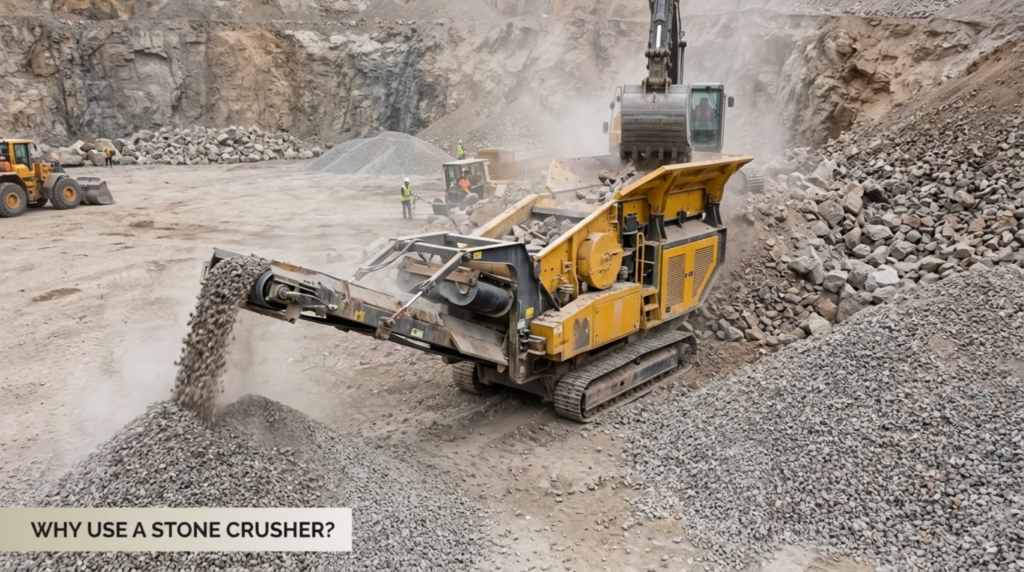
The advantages of a stone crusher machine combine into a strong case for any operation that works with rock and aggregate. The most immediate benefit is a marked increase in material-processing efficiency. Breaking rock down by hand or with basic tools is painfully slow, but a crusher processes stone continuously and rapidly, turning large volumes of raw material into sized products in a fraction of the time. This efficiency keeps material flowing to where it is needed and prevents the delays that occur when processing cannot keep up with demand.
Closely tied to efficiency is a significant reduction in manual labor. Reducing rock manually is exhausting, time-consuming, and requires considerable effort from a crew. A stone crusher takes on that heavy work mechanically, allowing far fewer people to process far more material. This frees your workforce for skilled tasks rather than grueling physical reduction, making better use of your labor and easing the strain on your crew across the working day.
Two further benefits complete the picture of what these machines deliver:
- Consistent aggregate sizes: crushers produce uniform, sized material to specification, which is essential for construction work that depends on aggregate meeting exact requirements for concrete, road base, and drainage.
- High-volume handling: these machines are built to process large quantities of raw stone, sustaining the output that busy quarries, aggregate plants, and construction sites demand.
Together, these benefits protect both productivity and quality. The efficiency and high-volume capacity keep operations supplied with material at the pace their work requires, while the consistency of the output ensures that material meets the standards projects depend on. Reduced manual labor lowers fatigue and helps control the cost of processing. For any operation that regularly turns raw rock into usable aggregate, a stone crusher is a practical investment that pays back in saved time, dependable output, and a smoother, more productive workflow on every job.
Choosing the Right Stone Crusher Machine
Selecting the right stone crusher means matching the machine to the real demands of your material and your operation rather than choosing by size or price alone. Several factors deserve careful thought, and weighing them together will guide you toward the model that performs dependably for your work. The aim is a crusher that handles your material effectively, produces the output you need, and suits the conditions of your site.
Begin with the material and the product you intend to make. The following factors should shape your decision:
- Material hardness: harder, more abrasive rock demands a machine and crushing mechanism built to break it efficiently while resisting wear, so knowing your material is essential.
- Required output size: determine the finished sizes you need, since this guides whether you require a machine for coarse primary crushing, finer secondary shaping, or both in sequence.
- Production capacity: match the crusher’s throughput to the volume of material you must process, choosing a machine that meets your demand without being under or oversized for the work.
Beyond material and output, the working environment plays a major role. Jobsite conditions influence which machine fits, since a fixed installation at a quarry has very different requirements from a machine that must move between sites or operate in confined areas. Consider the space available, the access to your site, and whether the crusher needs to be portable or can be permanently installed.
Finally, consider the type of crushing application itself. Primary crushing, secondary crushing, and finishing each call for different machines and mechanisms, and many operations combine stages to reach their final specification. Thinking through material hardness, output size, production capacity, jobsite conditions, and application type together allows you to select a crusher that delivers reliable, efficient performance suited precisely to your needs, rather than one that falls short of the demands your work places on it.
Conclusion
A stone crusher machine is a foundational piece of equipment for anyone who turns raw rock into usable material. It breaks large stones into smaller, sized products through mechanical force, using crushing, compression, and impact mechanisms matched to the material and the output required. These machines serve a broad range of industries, from road construction and building projects to quarrying, mining, aggregate production, and landscaping, converting raw rock into the consistent crushed material each application depends on. The benefits are clear and consistent: greater processing efficiency, reduced manual labor, uniform aggregate sizing, and the capacity to handle high volumes of stone. Choosing the right machine means weighing material hardness, required output size, production capacity, jobsite conditions, and crushing application type together. Match the crusher to your real working needs, and you will gain reliable, efficient equipment that keeps sized material flowing and your operation running at full pace.
Frequently Asked Questions
1. What is a stone crusher machine used for?
A stone crusher machine is used to break large rocks and stones into smaller, more manageable sizes for construction and industrial applications. It takes raw, oversized material from a quarry, demolition site, or stockpile and reduces it into usable products such as crushed stone, gravel, and fine aggregate. The machine bridges the gap between rock as it comes out of the ground and the sized material a project actually needs. This size reduction matters because construction and industrial work rarely uses stone in its original form. Roads need graded aggregate, concrete needs specific stone sizes, and drainage systems need clean, consistent gravel. Stone crushers produce exactly these materials by processing large rock into smaller fractions, sorted and sized for their intended use. On any operation that consumes crushed stone or aggregate, the crusher becomes a foundational machine that converts an abundant but raw material into finished, workable products.
2. How does a stone crusher machine work?
A stone crusher reduces rock by applying mechanical force through a few distinct actions: crushing, compression, and impact. Compression works by squeezing rock between two hard surfaces until it fractures, similar to a nutcracker pressing a nut. Impact breaks stone by striking it with force, shattering the material against fast-moving parts or hard surfaces. Crushing more broadly describes the overall reduction of rock into smaller pieces through applied mechanical pressure. Different crushers use different mechanisms because materials and output requirements vary. Compression-based machines tend to suit hard, abrasive stone and produce coarser material, making them well suited to primary crushing. Impact-based machines often work well on softer or medium materials and can produce a more shaped, uniform product suited to finer stages. Because each mechanism has strengths for particular materials and output goals, many operations use more than one type in sequence to reach the final specification.
3. What industries use stone crushers?
Stone crushers are used across a wide range of industries wherever raw rock must be turned into usable crushed material. Road construction relies heavily on them to produce graded aggregate for sub-bases, surfaces, and drainage layers. Building projects use crushed stone and aggregate for concrete, foundations, fill, and structural work, all supplied by crushers in the sizes each application needs. In quarrying, the machine is central to the operation, processing extracted rock into marketable crushed products. Mining depends on crushers to reduce ore and rock as part of extracting valuable material. Aggregate production operations use crushers to manufacture the sized stone, gravel, and sand that supply construction markets. Landscaping uses them to produce decorative stone, gravel, and graded material for gardens, pathways, and drainage features. The common thread across all these settings is converting large, raw rock into consistent, sized material that projects can actually use.
4. What are the main benefits of using a stone crusher?
The benefits are substantial and consistent. First, a stone crusher greatly increases material-processing efficiency, turning large volumes of raw rock into sized product far faster than manual methods and keeping material flowing to where it is needed. Second, it significantly reduces manual labor, taking on the exhausting work of breaking rock mechanically so that fewer people can process far more material, which frees your workforce for skilled tasks and eases strain on your crew. Third, crushers produce consistent aggregate sizes, delivering uniform material to specification, which is essential for construction that depends on aggregate meeting exact requirements for concrete, road base, and drainage. Fourth, these machines handle high volumes of raw stone, sustaining the output that busy quarries, aggregate plants, and construction sites demand. Together, these advantages protect productivity and quality, keeping operations supplied at pace while ensuring the output meets the standards projects depend on.
5. How do I choose the right stone crusher for my operation?
Start with your material and the product you intend to make. Consider material hardness first, since harder, more abrasive rock demands a machine and crushing mechanism built to break it efficiently while resisting wear. Next, determine your required output size, as this guides whether you need coarse primary crushing, finer secondary shaping, or both in sequence. Match the crusher’s production capacity to the volume of material you must process, choosing a machine that meets your demand without being under or oversized. Assess your jobsite conditions carefully, since a fixed quarry installation has very different requirements from a machine that must move between sites or work in confined areas, so consider space, access, and whether you need portability. Finally, think about the type of crushing application, as primary, secondary, and finishing stages call for different machines. Weighing these factors together lets you select a crusher that performs reliably and suits your needs precisely.
